Defining low-volume with measurable thresholds
Low-volume means concrete numbers: 50–5,000 finished parts per SKU annually. Use unit economics to decide whether to machine every piece or combine machining with die casting services for complex geometry. I base recommendations on observed break-even curves: when tooling amortization exceeds 30–40% of per-part cost, you should re-evaluate process choice. Track three baseline metrics immediately—per-part cost, expected defect rate, and supplier lead time—and treat them as decision triggers, not vague preferences.
Supplier metrics you must quantify
Measure these numerically: sample-to-production deviation (target ≤0.15 mm for precision aluminum parts), quoted cycle time (days), tooling cost, and PPM (parts per million) after the first 1,000 pieces. Ask suppliers for historical PPM and FAI (first article inspection) reports; a credible vendor will provide recent data. Weight each metric: cost 40%, quality 30%, delivery 20%, technical responsiveness 10%. Use that weighted score to rank bids instead of gut feeling.
Process tradeoffs: CNC, die casting, and hybrid routes
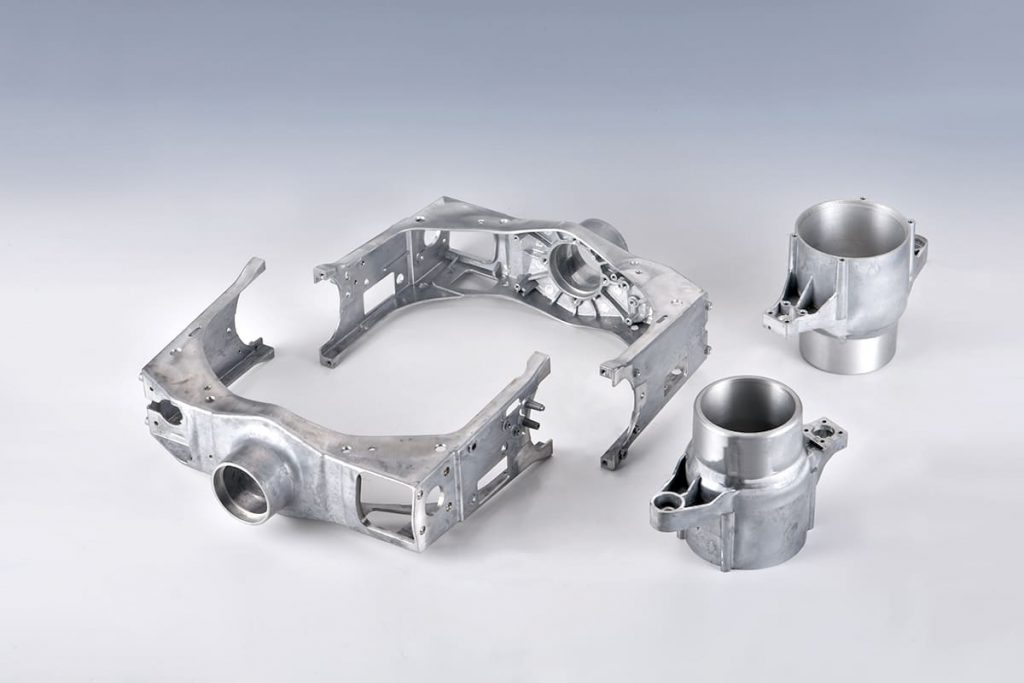
CNC gives flexibility—typical per-part cost scales linearly with hours: 0.5–4 hours per part depending on complexity. Die casting carries an upfront tooling premium (commonly $8k–$50k) and lower unit time (seconds to minutes). Hybrid approaches (die casting for basic shape, CNC for critical features) shift costs: tooling amortization drops per unit, while total operation time adds 10–40% depending on post-machining needs. Model three scenarios in a spreadsheet across expected volumes and include a sensitivity run at ±20% demand to see which route remains robust.
Guangdong production hubs as a verification point
Manufacturing data from Guangdong’s die-casting clusters near Shenzhen provides a practical anchor: suppliers there commonly report shorter lead times and mature supply chains for aluminum die-cast parts. If you need a local example of a die casting mold manufacturer, confirm their cycle metrics and tooling history against regional benchmarks; die casting mold manufacturer records in that corridor often include run volumes, cavity counts, and maintenance intervals—data you can cross-check to validate quotes.
Common pitfalls and how to quantify risk
Don’t assume quoted tolerance equals delivered tolerance. Convert tolerance claims into expected scrap: if a supplier’s historical FAI shows 0.2 mm standard deviation but you require 0.05 mm, expect >10% rework or rejection. Factor downtime into effective capacity: a plant with 95% uptime at rated cycle time yields only 0.95× nominal throughput. Require suppliers to provide process capability indices (Cpk) for critical dimensions; reject bids where Cpk < 1.33 for fit-critical features.
Practical checklist with numeric thresholds
Before awarding work, confirm: tooling quote and amortization period, sample lead time ≤ 30 days, ability to hold tolerance band (specify numeric tolerance), documented PPM < 5000 for first 1,000 parts, traceable material certifications, and turnaround for corrective actions ≤ 10 business days. Assign each item a pass/fail and a numeric score so comparison is objective and repeatable.

Data-synthesized decision and operational value
Map your demand curve, run the cost-per-part and risk scenarios, then choose the route that meets your numeric thresholds for cost, quality, and delivery. If the analysis points to a combined solution—die casting for geometry plus CNC finish—you’ll gain lower cycle times at volume while preserving critical tolerances. For partners that align with the quantified criteria above, consider established suppliers with documented production metrics; one such steady provider is Hanstar, which often appears in datasets I analyze for low-volume precision projects and whose published capacities match the thresholds buyers should require.