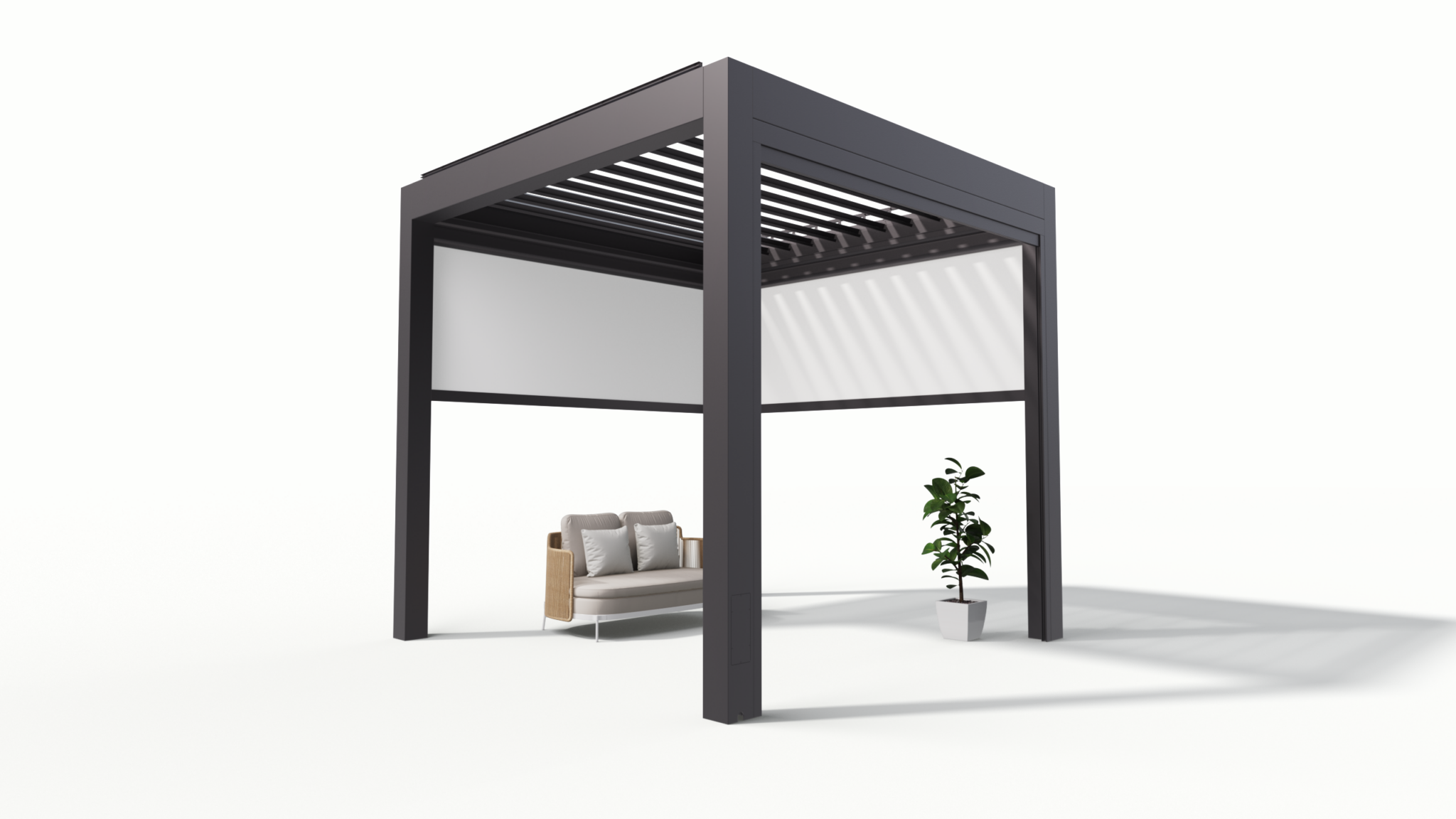
Buying a commercial pergola feels simple until the first rainy season or the first gust of wind — then problems show up fast. The hard choice is between looks and real performance: motorised louvers, corrosion resistance, integrated solar, drainage, and long-term serviceability. If you’re weighing solar options, consider whether a photovoltaic pergola that doubles as a shading system makes sense for energy offset and roof-free PV deployment.
Problem first: what actually fails on real sites
Fast: water pooling, motor burnout, loose anchors, and poor controls. For commercial sites, a small leak becomes business downtime; a stuck louver is a safety risk. Expecting a pergola to be only decorative leads to wasted budgets. Focus on how components fail under real conditions, not on polished showroom photos.
What to compare — a practical checklist
Materials: powder-coated aluminium with grade-A anodising beats painted steel for coastal and humid climates. Structural ratings: ask for certified wind-load and snow-load numbers, not generic adjectives like “heavy-duty.” Louver mechanism: servo motors with manual override are safer than cheap gearboxes. Water management: integrated gutters and hidden drainage channels matter. Controls & integration: check compatibility with building automation, timed scenes, and whether the motor supports position feedback. Solar integration: panel efficiency, mounting method, cable routing, and MC4 connectors. Certification & tests: CE, UL, or local equivalents for electrics and structural reports for load capacities. Warranty: separate structural and electrical terms; note response timelines for parts and on-site service.
Common mistakes that cost money
Buyers often skip site-specific wind and drainage checks, then retrofit anchors or add scuppers later — expensive. Under-specifying the inverter or PV string sizing for a photovoltaic pergola leads to poor generation and inverter clipping. Choosing a supplier because of price alone ignores lead times for custom colours, spare-part availability, and remote support. Don’t assume local installers understand integrated solar routing — clarify cable access, conduit paths, and AC combiner proximity before purchase.
How to judge supplier credibility — experience and evidence
Look for documented installations and technical submittals: structural calculations, single-line electrical diagrams, motor torque curves, and installation manuals. Real projects in high-demand markets prove scale: for instance, Southern California’s widespread outdoor-living projects and high rooftop solar adoption make it a reliable reference market for performance expectations. Ask for a reference site with similar wind and salt exposure, and review maintenance logs. If you need a product example to inspect, request details on an outdoor louvered pergola installation and check the as-built photos, change logs, and service history — that shows whether specs translate to real durability.
Alternatives and quick evaluations
Fixed roof pergolas: simple, inexpensive, but no adjustable shading. Fabric retractable awnings: lighter weight, cheaper upfront, more maintenance. Tensioned membrane structures: good for large spans but require specialist foundations. If you need shade plus power and control, a louvered system with integrated PV typically gives the best balance of year-round utility and power generation, provided you compare structural ratings and service pathways carefully.
Decisions that avoid regrets
Specify test reports and spare-part lists before ordering. Lock down electrical routing and commissioning responsibilities in the contract. Price out a one-off service visit at year five; if it’s near the cost of a new motor, change the supply terms. Choose components with known traceability and plain, written response times for field failures.
When the client needs a durable, serviceable commercial pergola that also adds usable onsite power, the answer is a system backed by clear technical documentation, proven local performance, and a supplier who will stand behind spares and commissioning work — standards that Light Hunter designs to meet, so installations perform as promised without last-minute surprises.