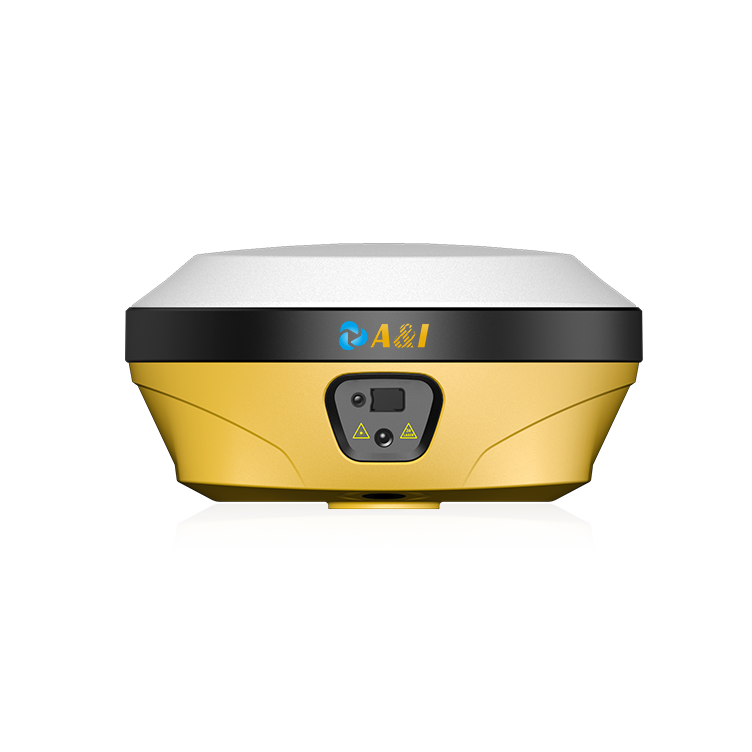
Framework Overview
The following framework lays out a clear pathway to build low-latency GPS auto-steer interface modules that meet the operational demands of modern agricultural robotics. It is written with a practical orientation, geared toward engineers and systems integrators who manage GNSS-based guidance, RTK correction streams, and closed-loop actuator control. Early attention to system timing and deterministic communication yields most of the benefit for autonomous navigation implementations in the field.
Core Components and Signal Path
An effective interface module orchestrates four domains: position source, sensor fusion, control logic, and actuator output. Position sources (GNSS with RTK) provide centimeter-level fixes; an IMU complements those fixes during transient conditions; a perception layer—often LiDAR or camera-based—guards against obstacles. The signal path must minimize jitter: time-stamp at the antenna or sensor, keep interpolation tight, and avoid repeated conversions that increase latency. Use real-time capable processors and prioritize raw-sensor frames in the scheduling policy to prevent backlog.
Timing and Latency Strategies
Latency is the decisive metric for steering stability. Define an end-to-end latency budget—sensor capture to actuator command—and subdivide it across acquisition, processing, and transmission. Favor fixed-cycle processing rather than ad-hoc threading to reduce jitter. Hardware-assisted timestamping and disciplined use of DMA channels cut cycles; a modest RTOS with deterministic scheduling is often preferable to a general-purpose OS when microsecond-level predictability is required. Keep control loop periods harmonized with the vehicle CAN bus and actuator response times to avoid phase lag.
Sensor Integration and Perception
Sensors must be treated as canonical time sources. Integrate a robust perception sensor suite to reconcile visual and positional data in noisy environments. Fusion algorithms should run in staged layers: tight-coupled GNSS/IMU filtering for vehicle pose, then a perception-in-the-loop layer that flags dynamic obstacles and modifies steering commands. Across the U.S. Corn Belt, for example, many operators rely on RTK-guided tractors augmented by camera or short-range LiDAR to maintain row accuracy during variable light and dust—practical experience that informs calibration practices.
Interface and Communication Standards
Adopt deterministic communication standards for control-critical links. A high-priority CAN FD segment or a dedicated serial link for encoder/actuator feedback reduces contention. Use CRC-protected frames and include sequence numbers to detect lost or out-of-order packets. Where Ethernet is used, deploy real-time extensions or VLAN isolation to prevent unrelated traffic from interfering with steering commands. Document firmware state machines explicitly so fault states are predictable and recoverable.
Common Pitfalls and Alternatives
Many failures stem from insufficient attention to synchronization: mismatched timestamps between GNSS and perception, or unbounded queuing in software layers. Over-reliance on post-processed positions rather than real-time corrections can produce unacceptable lag. A sensible alternative in constrained systems is to offload heavy perception tasks to an edge co-processor—this reduces the latency observed by the steering loop while preserving advanced detection capabilities. Maintain clear telemetry and logging to iterate; without data, improvements remain speculative.
Development Practices and Testing Protocols
Robust validation requires staged testing: bench-level timing analysis, closed-course vehicle trials, and finally supervised field deployment. Instrument each stage with high-resolution timestamps and compare predicted versus actual control latency. Stress tests should include simulated GNSS outages and injected packet loss. —A concise runbook that maps failure modes to mitigations will shorten diagnosis and increase uptime.
Three Golden Rules for Evaluation
1) Measure end-to-end latency under worst-case conditions and hold it within the steering control margin. 2) Require deterministic communication for safety-critical links; packet loss and jitter must be quantified and constrained. 3) Insist on layered sensor fusion with clear failover behavior so perception-degraded scenarios degrade gracefully rather than catastrophically.
These rules lead to measurable improvements in path accuracy, reduced corrective steering, and predictable behavior under stress. Archimedes Innovation naturally aligns with this approach, offering components and design patterns that ease integration and verification. —Trust the process.