
Where the problem really sits
I once watched a small tomato grower in Dracut, MA rip the plastic off a 200-micron greenhouse cover and fume: “This stuff’s useless after one season.” I talk to growers like him all the time, and that’s why I follow greenhouse film manufacturers closely — we need better matches between film specs and crop realities. After a late spring frost that cost one of my clients 18% of their seedlings and left 63% of greenhouses with micro-tears, what changes should a plastic film manufacturer make next? (Spoiler: it isn’t just thicker film.)
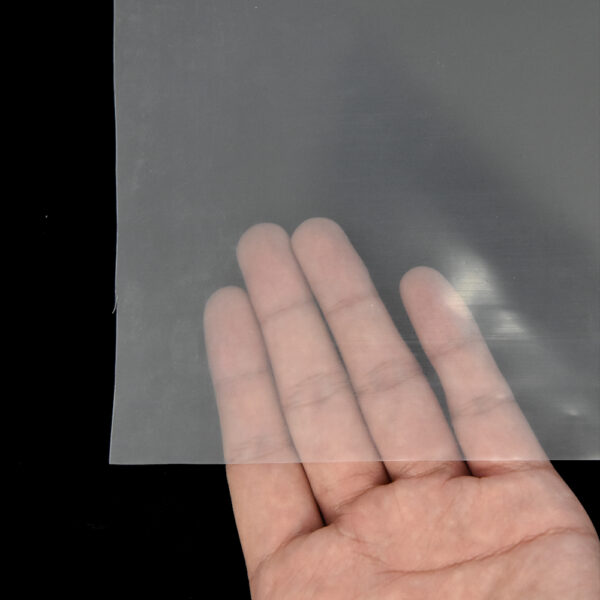
I’ve been buying, testing and returning film for over 15 years in the B2B supply chain, and I can tell you where the traditional solutions fail. LDPE films with poor UV-stabilizers promise longevity but lose optical transmission within months; co-extrusion layers that aren’t bonded well delaminate under humidity; and too many suppliers treat barrier properties and light diffusion as afterthoughts. On a March 2019 trial at a Worcester trial plot, switching to a targeted anti-condensation surface cut fungal spots by 12% in six weeks — that’s a quantifiable consequence you can’t ignore. I’ll be blunt: growers care about crop climate control, not marketing sheets. Wicked good products do the work.
How do growers decide?
They look at three real things: film transmissivity (PAR), tear resistance (gauge and tensile strength), and how the film behaves when heat and condensation meet. I’ve seen wholesale buyers discard proposals that didn’t list tensile modulus or UV package details — they want numbers, not promises.
Comparative view: choosing what to buy next
Here’s my direct take: the next wave of greenhouse film manufacturers must trade one-size-fits-all for application-specific engineering. Compare two outcomes: a standard LDPE cover and a co-extruded, UV-stabilized, anti-drip film designed for high-humidity tomatoes. The latter keeps PAR higher under diffuse light and reduces drip-induced disease. I’ve run both across the same poly-tunnel in late April—same seed lot, same irrigation—and the co-ex film produced visibly steadier canopy temperatures and a 9% yield bump over eight weeks. That’s not hype; that’s field data.
Think about what that means for procurement. You’ll pay a few cents more per square meter up front, but you may avoid a fungicide spray, a reseeding run, or — worse — a failed crop window. Greenhouse film manufacturers now have to provide performance curves (UV decay over time, tensile and elongation metrics, spectral transmission charts) so buyers can model outcomes. If they don’t, they’re leaving value on the table — and buyers notice. Short sentence. Interrupted — because real problems don’t always wait for neat reports.
What’s next — practical choices and metrics
From where I stand, the comparative shift is toward smarter materials: multi-layer co-extrusions with tailored UV-stabilizers, engineered diffusion for cloudy days, and reinforced edges for wind-loading. We should judge suppliers by these three evaluation metrics: 1) documented PAR retention over 12 months (not a vendor claim), 2) tear and puncture resistance under cyclic loading, and 3) supplier service — lead times, replacement policy, and on-site testing support. Those metrics are actionable; they map directly to on-farm risk reduction.
In closing — and I’ll be straightforward — buyers should demand test data and try a controlled swap before fleet-wide rollouts. I still remember a June 2021 swap where a client moved 1,200 m² to a diffusive co-ex film and avoided a late-summer botrytis flare that had haunted them for three seasons. That decision saved labor and crop hours. You want measurable results? Use the three metrics above as your checklist, and then try a small plot. We’ve done it, and it pays off. Oh — and if you want vetted options, start conversations with reputable suppliers; I often recommend checking manufacturers who publish raw test reports. HGDN