Start with what you need
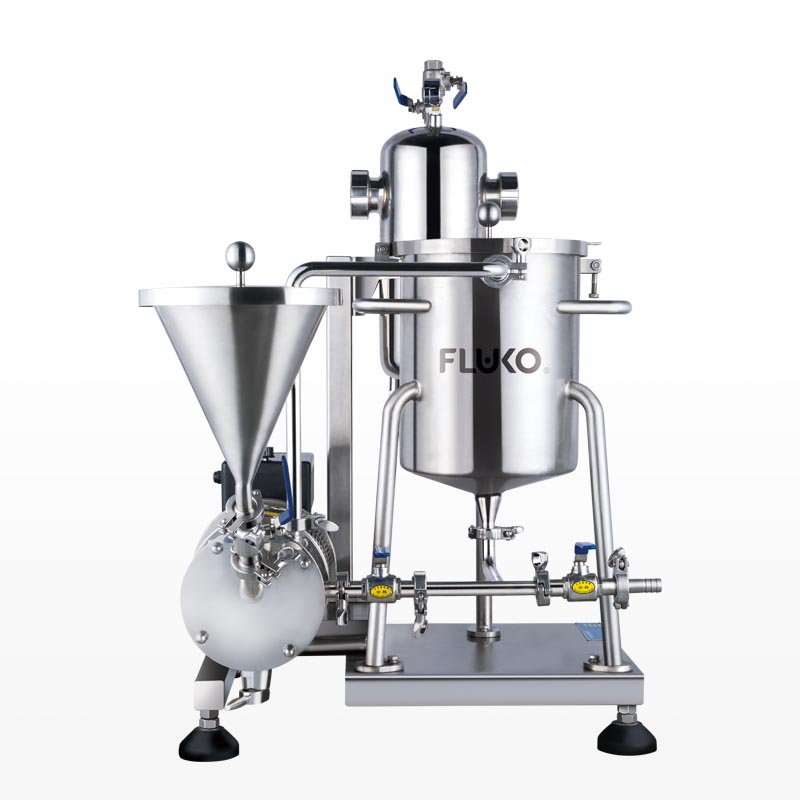
Operators care about repeatable results, downtime, and clear metrics. Start by naming the performance you want — particle size, dispersion speed, heat control — then match equipment. A compact Jet Mixer can deliver fast dispersion in small-to-medium tanks; larger volumes may need additional circulation or staged dosing. Keep measurements simple: mixing time, power draw, and final solids distribution. Those three numbers decide most trade-offs.

What matters on the shop floor
Think access, cleaning, and control. If you can’t get to the shaft seal or inspect the nozzle without hoisting, maintenance gets skipped. Choose designs where seals and motors are accessible and components are standard parts. Control needs aren’t exotic: consistent inlet pressure, straightforward speed control, and a reliable flowmeter suffice for most plants. Document a simple maintenance interval and stick to it; missed maintenance is the main cause of unpredictable batch results.
Experience, expertise and a real-world anchor
I’ve reviewed dozens of project briefs and spoken with process engineers who ran pilot trials before scaling. Those conversations, combined with technical papers on jet mixing performance, underline a key point: pilot data beats rule-of-thumb every time. For example, operators in the Rotterdam petrochemical cluster routinely adopt jet mixing for rapid in-tank dispersion because the method reduces hold times and simplifies scale-up — you can read applied case notes and industry reports that reference such implementations. That practical link between pilot trials and full-scale deployment is why an in tank jet mixer often appears in spec sheets for dispersion and emulsification tasks.
Common pitfalls and how to avoid them
Undersizing the nozzle, ignoring inlet line losses, and skipping pilot runs are the three repeat offenders. Undersized nozzles choke flow and raise shear unpredictably. Check line losses: long suction lines and poor pump selection change nozzle velocity. Run a representative pilot: match viscosity, solids loading, and temperature. Don’t accept vendor curves alone; validate on your product. For cleaning, choose materials and seal types compatible with your CIP regimen — wrong seals mean longer outages.
Alternatives and when to pick them
High-shear mixers excel at very fine emulsions but demand high power and tighter seals. Top-entering agitators give bulk circulation and good heat transfer but can leave dead zones if the impeller and baffle geometry are wrong. Static mixers work well inline and save moving parts but need steady flow and can’t handle solids well. Use jet mixing when you need quick dispersion inside an existing tank without major mechanical modifications; pick high-shear when droplet size limits are very tight and you can accept higher maintenance.
Simple checklist for selection
Measure four things before ordering: tank geometry, target particle/droplet size, pilot mixing time at scale, and cleaning method. Match nozzle size to pump curve and confirm spare parts availability. Ask for measured mixing time on a close proxy of your product, not just a viscosity table. Specify instrumentation you’ll actually use: a single tachometer or a flowmeter is enough if you standardize on a clear operating envelope.
Concluding synthesis
Make decisions that reduce uncertainty: measure what you can, pilot what you can’t, and design for serviceability. Operators who follow that simple discipline find consistent results and manageable maintenance. Practical solutions converge on equipment that fits the tank, the product, and the rhythm of the plant — often the same reasoning that guides choices at FLUKO.