Introduction — a short shop-floor moment
I remember walking into a small metal shop where the welders were squinting through smoke and joking about “good enough” ventilation — but they sounded tired, not funny. In that very room, I started asking around and learned that lots of teams rely on fume collector manufacturers who promise big performance but deliver noisy fans and clogged filters. (I’ve seen the invoices.) Recent surveys I’ve read put workplace air complaints up by double digits in several industries, and that raises a simple question: how do you choose a supplier who won’t let you down?
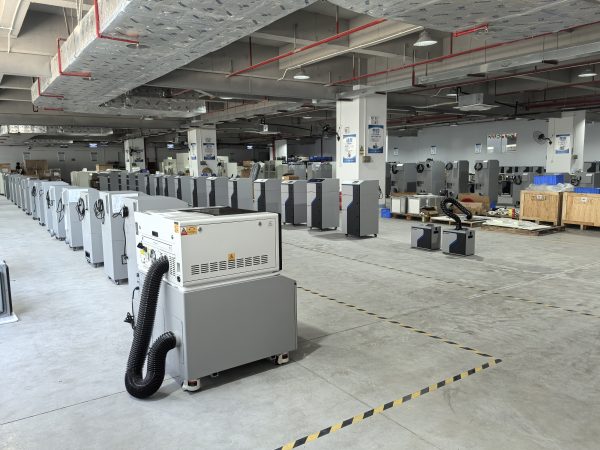
We’ll look at what matters when you evaluate vendors — from capture hoods to fan motors — and why price alone is misleading. I’ll share what I look for, the red flags I warn clients about, and a few practical checks you can run during a factory walk-through. Ready for the next bit? Let’s dig into why the usual fixes often miss the mark.
Deep Dive: Why traditional systems fail industrial fume extraction
industrial fume extraction is meant to protect workers and keep processes clean, yet many systems underperform because designers focus on single components instead of the whole capture path. Technically speaking, a collector is only as good as its capture hood, duct layout, and exhaust balance — not just the HEPA filters or activated carbon cartridges. I’ve seen installations where high-efficiency filters sit behind poorly placed capture hoods; airflow velocity drops, particles settle, and the supposed solution never interacts with the emission source properly.
What goes wrong on the floor?
First, people overspec fans without considering backpressure—so the fan motors race but the actual capture at the hood is weak. Second, routine maintenance gets deprioritized; baghouse bags or cyclone separators choke and performance collapses. Third, control logic is often absent: no PLC or feedback loop to adjust for changing loads. Look, it’s simpler than you think — a few design missteps cause most failures. From my experience, missed measurements (like not testing at the hood face) and underinvesting in things like power converters and duct sealing are the real culprits, not just filter choice. — funny how that works, right?
Forward-Looking: New principles and how to evaluate suppliers
What’s next? I favor suppliers who design around principles rather than part lists. That means integrated solutions: capture hood optimization, matched fan motors with variable frequency drives, smart sensors at the source, and control nodes that can act locally (edge computing nodes) to keep performance steady. When vendors bring these ideas into a proposal I can see they’re thinking systemically. They’re not selling a HEPA canister — they’re selling a predictable outcome.
Real-world impact — what to test
Practically, I recommend three evaluation metrics you can use during selection: 1) Measured capture efficiency at the hood (not just fan specs), 2) System-level pressure and airflow stability under variable load, and 3) Maintainability — filter access, spare parts, and how the vendor supports PLC or control updates. Ask for before-and-after test data and demand on-site demonstrations. If they can’t provide simple numbers, walk away. I’ve used these checks with clients and cut replacement cycles by half, reduced downtime, and improved air quality — measurable wins you can show to leadership.

In closing, choose suppliers who think in systems, not components. Evaluate capture performance first, controls second, and maintenance third. Do that, and you’ll avoid the usual headaches — and you’ll be breathing easier. For practical help and solutions that follow these principles, consider speaking with PURE-AIR.