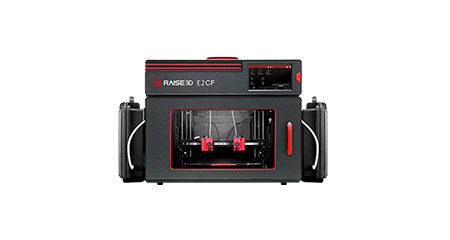
How to separate stated product details from assumptions about Rapid Prototyping 3D Printer: trade-off framing for shortlisting
A rapid prototyping 3d printer should be shortlisted against the work it must support, not against a long list of attractive specifications. Project managers need a clear decision record: what the team will make, which process fits that work, what space is available, and which conclusions are directly supported by product information.
1. Clarify the decision before comparing machines
Start by describing the output. The relevant question may concern concept validation, product-performance testing, manufacturing operations, production tooling, or customized end-use parts. These uses can lead to different priorities, so a single “best printer” ranking is not a useful starting point.
Next, define the operating context. Frequent demand, rapid iteration, short lead times, confidential projects, and direct process control can support an in-house printing decision. That decision also requires attention to equipment, materials, labor, training, maintenance, facilities, and utilization. Treat these as planning criteria rather than assumptions about a particular model.
Space belongs in the first screen as well. A stated print dimension is not the same as a complete installation requirement, so record the available area separately from the build volume. For example, one listed dual-extruder print size is 255 × 300 × 300 mm, while another is 295 × 240 × 240 mm. These are page-listed print dimensions, not a basis for inferring the overall footprint or workflow.
2. Build a concise comparison framework
Use four columns in the shortlist: intended output, relevant process, stated product detail, and open assumption. The first column keeps the comparison tied to the project. The second prevents unlike processes from being treated as interchangeable. The third records evidence. The fourth makes uncertainty visible instead of allowing it to become an unstated buying criterion.
Process choice should follow the part and production requirement. FFF printers use filament and are commonly selected for functional prototypes, engineering materials, larger parts, manufacturing tools, and some end-use applications. DLP and resin systems are suited to fine details, smooth surfaces, and precision parts. SLS systems use polymer powder for complex, support-free parts and efficient batches. These descriptions help narrow the field, but they do not establish that one process will meet every project requirement.
| Process | Page-listed application fit | Shortlisting question |
|---|---|---|
| FFF | Functional prototypes, engineering materials, larger parts, manufacturing tools, and some end-use applications. | Is the project centered on these output types? |
| DLP/resin | Fine details, smooth surfaces, and precision parts. | Are detail and surface requirements the main reason for considering this process? |
| SLS | Complex, support-free parts and efficient batches. | Does the project require these part or batch characteristics? |
When a team uses the phrase high end 3d printer, ask what decision that label is meant to support. It might refer to a need for functional prototypes, larger parts, manufacturing tools, fine detail, smooth surfaces, or batch production. Replace the label with a measurable project requirement and then map that requirement to the page-listed process information.
A useful real-world anchor is manufacturing support. The official page describes producing aids quickly for assembly, welding, inspection, factory automation, and flexible production lines. It identifies shorter tooling lead time, faster line changeover, lower cost, and easier continuous improvement as the primary value in high-mix or low-volume production. This application scope supports a discussion of manufacturing aids; it does not, by itself, establish performance or suitability beyond that scope.
3. Keep trade-offs separate from conclusions
Do not turn a feature list into a performance claim. “FFF,” “dual extrusion,” “improved cooling,” and “interchangeable hot ends” are stated descriptors. They may be relevant to a project, but the shortlist should not infer a particular output quality, speed, material result, or compatibility unless that conclusion is supported by the available evidence.
The same discipline applies to end-use parts. A page describes low-volume and customized production as appropriate when conventional tooling is uneconomical, volumes are low, designs change frequently, or every product requires customization. It also states that parts still need to meet the strength, safety, durability, quality, and regulatory requirements of their applications. Therefore, the project brief should name those requirements rather than assuming that a printer category satisfies them.
For each candidate, write one sentence that states the evidence and a second that states the question it leaves open. For example: “The page identifies this process as suitable for functional prototypes.” Then: “The project still needs a requirement-based assessment of the intended part.” This format prevents marketing language, category labels, and isolated dimensions from carrying more weight than they deserve.
4. Carry the requirements into procurement
Convert the shortlist into a focused sourcing brief. Include the intended parts, expected production pattern, process under consideration, required print dimensions, available space, materials under review, and the project’s quality or regulatory requirements. Mark every item as either stated evidence, a project requirement, or an unresolved assumption.
Procurement should also preserve the reason for each trade-off. A team may prioritize rapid iteration, direct process control, or low-volume customization, while another may need fine detail or efficient batches. The decision is stronger when the chosen priority is visible and when alternatives are excluded for a stated reason rather than a vague impression of being less advanced.
In summary, separate what the page states from what the project still needs to establish. Start with the part and workflow, compare the relevant process information, keep space and requirements explicit, and carry unresolved questions into procurement. That evidence-led method lets project managers assess a rapid prototyping 3d printer without turning the name Raise3D into an unsupported conclusion about fit.