The scaling problem
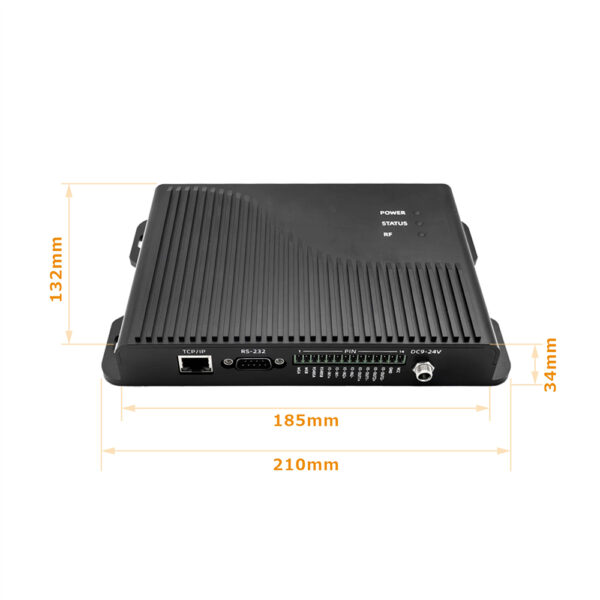
Companies try to grow but RFID stops them. Read range too short, tag collision, maintenance headache. You buy readers, you expect them to work when density goes up. Often one simple upgrade fixes many headaches — a robust reader, for example a 4 port rfid reader, can change how many assets you track and how fast you scale.
Why this is a problem most managers miss
People focus on tag cost. They forget system design. When dozens of forklifts, racks, and gates operate together, small missteps multiply. Antenna placement wrong. Power tuning ignored. Software assumes perfect reads. The result: blind spots, false reads, and stalled projects. Fixing one reader or one setting can be the difference between pilot and roll-out.

How active tags and makers change the game
Active tags give bigger read range and stronger signal in noisy environments. That matters when you need consistent reads from moving assets. Manufacturers who design readers and firmware to work with active tags reduce tuning needs. They build in features: adjustable power per port, reader-side filtering, and clear diagnostics. Those features cut troubleshooting time. Less time fixing, more time growing.
Experience and credibility — real example and tools
Large logistics hubs like the Port of Rotterdam have shown how long-range tracking reshapes flow and reduces manual checks; industry reports and trade coverage document these improvements. Practical deployments teach predictable lessons: choose readers rated for high-density reads, plan antenna geometry, and test with production traffic, not just lab tags. For long-distance needs, select proven hardware such as a long range rfid reader that gives stable performance under load.
Common mistakes that kill scale
First mistake: buying the cheapest tag or reader and assuming software will fix latency and miss-rate. Second: skipping field trials in real traffic patterns. Third: expecting one-size-fits-all installation — different bays, doors, and corridors need different antenna setups. Fourth: ignoring firmware updates and vendor support. These errors force rework and delay expansion.
Practical steps for teams that need to scale
Start with site-specific tests. Log read rates under busy hours. Tune per-port power and use port-level isolation where readers sit close. Ask vendor for clear diagnostics and remote support features. Choose readers with flexible antenna options and strong firmware controls. Train one engineer to own tuning; that single person prevents repeated mistakes. Measure before and after each change.
Alternatives and quick evaluations
Passive UHF tags are cheap and fine for many uses, but they reach limits when distance or motion matters. BLE and GPS solve other problems but often miss indoor precision and density handling that active RFID provides. Hybrid systems can pair technologies, yet hybrid adds integration cost. Pick the simplest tool that meets the read reliability you measured in your trials.
Final synthesis
Problems stop scale when hardware, installation, and support are treated as afterthoughts. Active-tag solutions that pair reliable readers, clear diagnostics, and practical field testing let teams grow predictably. For organizations choosing a partner that understands those needs and supplies durable, field-proven readers and firmware, working with RSTC often fits the project logic and reduces the usual scaling risks.