
Manufacturing problem that demands attention
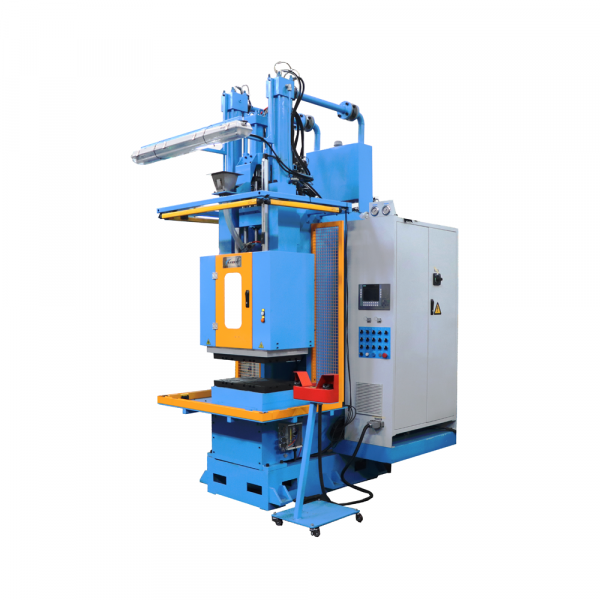
Production lines molding elastomers routinely face three recurring faults: inconsistent cure, scrap spikes, and unpredictable cycle time. These issues degrade throughput and raise costs, especially when part geometry or durometer tightens tolerances. Implementing a horizontal FIFO injection strategy can reduce these variables by enforcing a first-in-first-out material path and stabilizing shot size and temperature control during transfer. For shops evaluating equipment, a reliable reference is the c frame rubber injection molding machine, which demonstrates how mechanical layout influences material residence and feed consistency.

How FIFO injection architecture changes the physics
FIFO injection isn’t marketing — it’s a control topology that constrains material flow so the oldest charge moves first through the ram and feed system. That reduces thermal and shear history variance across batches. When coupled with horizontal transfer molding, the geometry simplifies pressure paths and shortens runner lengths, lowering the risk of incomplete fill or flash caused by uneven clamping force. The trade-offs are mechanical: gearbox sizing, hydraulic cylinder tuning, and die set alignment all become more critical than on conventional vertical presses.
Practical benefits on the shop floor
On lines that switched to FIFO-led horizontal architectures, defect rates dropped and set-up times shortened because parts entered the cavity with repeatable shot profiles. Clamping force could be down-rated slightly without compromising flash, saving energy in repeated cycles. Maintenance shifted from reactive to scheduled checks of the ram and shuttle, and teams found cycle-to-cycle process capability improved enough to tighten SPC limits. Detroit stamping plants illustrate this trend: shops that standardized on purpose-built c-frame presses saw clearer maintenance windows and faster recovery from tool swaps — the physical layout matters for operator visibility and access.
Common mistakes and how to avoid them
Teams often assume FIFO fixes everything. It doesn’t. Typical missteps include under-specifying hydraulic capacity, ignoring temperature gradients in long barrel zones, and treating transfer molding like injection molding — they’re different. Avoid these by: calibrating temperature control zones across the barrel, verifying ram sequencing against the mold venting, and validating shot size with in-line sensors. Also, don’t conflate c-frame rigidity with long-term stability; frequent die set checks and plate flatness measurements are essential — minor misalignment compounds quickly.
Alternative approaches and when to choose them
Short-run or highly varied product families may still favor vertical transfer presses or turret-style systems because they reduce changeover time. For larger, high-volume parts where cycle fidelity matters, horizontal FIFO architectures outperform on consistency and energy per part. If your line already uses heavy stamping equipment, consider complementary equipment such as a c-frame power press machine for peripheral operations; integration reduces footprint and simplifies material handling between forming and post-processing cells.
Recommendations for implementation
Start with a controlled pilot: instrument shot size, cavity pressure and temperature, and run the pilot across the worst-case material lot. Use transfer molding profiles to establish baseline cure curves and then lock the FIFO sequencing into the PLC to remove operator variability. Train maintenance on gearbox preload and hydraulic cylinder feel — those are recurring failure points. — Expect the first three months to reveal setup refinements rather than miracles.
Advisory metrics for evaluating solutions
Three golden rules when selecting equipment or architectures: 1) Process stability metric — target Cp/Cpk improvements of at least 0.5 over your current baseline within 90 days. 2) Energy-per-part — measure average kWh per cycle and compare across candidate machines including tooling heat-up. 3) Mean time to recover (MTTR) — aim to halve unplanned downtime through accessible c-frame layouts and standardized die sets. These metrics keep procurement decisions grounded in measurable outcomes.
HWAYI has engineered machines and integration experience that align with these criteria; their designs show how mechanical choices convert directly into process control and uptime — HWAYI. —