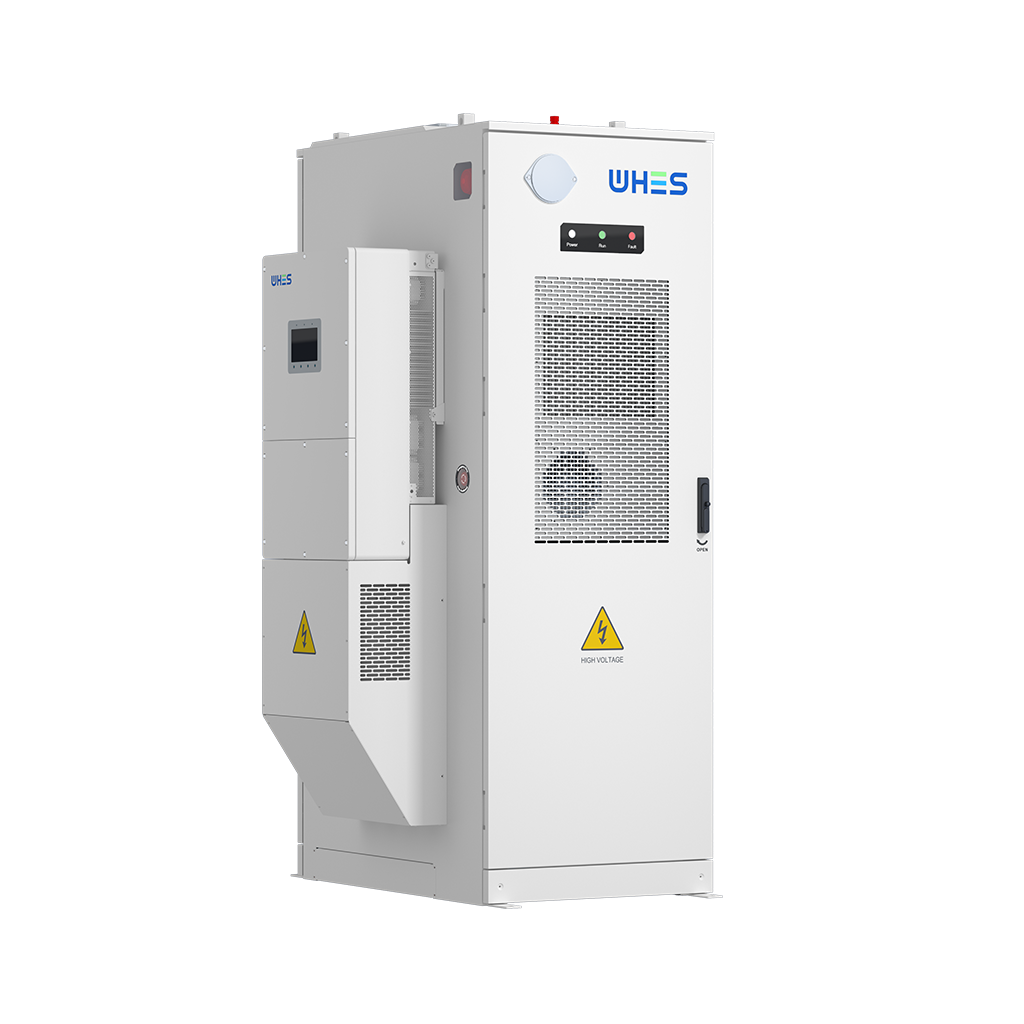
Framework overview: why islanding demand a method
Microgrid islanding is no longer an experimental edge case — it is a core resilience strategy for campuses, utilities, and critical facilities. A clear operational framework ties together control, protection, and energy resources so that when the main grid fails, the microgrid can transition to island mode cleanly and sustain essential loads. Central to that framework is utility scale battery storage, which can act as both the energy buffer and the immediate black-start agent, reducing outage impact and shortening downtime.
Key components of a seamless islanding framework
A practical framework has four interlocking components: grid-forming controls, protection coordination, an energy management system (EMS), and the storage asset itself. Grid-forming inverters supply stable voltage and frequency during islanding. Protection coordination ensures breakers and relays reconfigure without nuisance trips. The EMS orchestrates state of charge (SoC), dispatch priority, and black-start sequencing. Finally, the storage system — sized and configured for ramp rate and depth-of-discharge needs — becomes the hands-on agent that actually holds the microgrid together during a transition.
Real-world anchor: lessons from the Texas winter storm
The February 2021 Texas grid crisis demonstrated how brittle large interconnected systems can be under stress; millions of customers faced extended outages. That event accelerated utility and industrial interest in modular microgrids and local black-start options. Systems designed with rapid islanding and on-site storage reduced service interruptions in pilot projects post-2021 — a clear sign that well-architected storage-enabled black-start capability is not hypothetical but practical at scale.
How premium energy storage changes the calculus
Not all storage is the same. Premium systems bring higher cycle life, better thermal management, and more precise inverter controls, which matter during black-start when tight frequency and voltage regulation are required. These systems can do more than ride through a short dip; with grid-forming operation they can rebuild a network from cold start, energize transformers, and coordinate synchronous and asynchronous sources. The result: faster restoration, lower risk of cascade trips, and improved asset protection.
Integration patterns and technical trade-offs
Designers must balance capacity versus power, SoC reserve for black-start events, and the EMS logic that decides when to commit storage for islanding versus market dispatch. For example, favoring shorter-duration, high-power batteries improves initial black-start capability and frequency regulation, while longer-duration chemistries better sustain critical loads. Protection settings must be adaptive so that reclosing attempts and anti-islanding schemes don’t fight the intentional islanding sequence. These trade-offs are technical but also economic — they influence capital and operating expenditure.
Operational playbook: sequencing a reliable black-start
A dependable black-start sequence follows predictable steps: (1) detect grid loss and confirm island intent, (2) initiate grid-forming inverter operation and stabilize voltage/frequency, (3) close critical feeders in staged priority, and (4) ramp generation and synchronize any backup gensets when needed. The EMS should log each step and enforce SoC thresholds to preserve reserve margins. Testing these sequences in staged drills — not just tabletop exercises — verifies real-world performance under load and thermal stress.
Common pitfalls and how to avoid them
Teams often under-allocate reserve SoC for black-start, over-index on unit-cost rather than lifecycle value, or neglect adaptive protection that tolerates islanding transients. Another mistake is assuming any inverter can safely operate grid-forming under all conditions — firmware and control maturity matter. Run at least one full-scale simulated islanding test with load banks and the actual protective relays to find integration issues before a live event — you’ll uncover timing mismatches and coordination gaps that paperwork won’t reveal. —
Comparing alternatives: batteries, hybrid systems, and conventional gensets
Battery-centric microgrids excel at immediate response and smooth frequency regulation. Hybrid systems that combine batteries with fast-start gas generators or fuel cells extend duration and provide fuel diversity. Conventional gensets still play a role for long-duration outages but are slow to start and impose maintenance burdens. The right mix depends on service-level targets: short black-start and critical-power continuity favor premium storage; extended outages push designers toward hybrids or redundant generation.
Metrics that matter when selecting solutions
Evaluate candidates using operational and financial measures: round-trip efficiency and usable energy for dispatch economics; cycle life and thermal design for lifetime cost; and control maturity — specifically grid-forming capability and EMS integration — for operational reliability. Also consider response time (ms to stabilize frequency), ramp rate (kW/s), and documented test results from similar deployments — real performance beats theoretical specs every time.
Three golden rules for choosing the right approach
1) Prioritize control maturity: insist on proven grid-forming inverter behavior and tested EMS sequences rather than feature promises. 2) Design for the event, not the average: reserve SoC and power headroom specifically for black-start and islanding contingencies. 3) Validate before commissioning: require staged live tests with protective devices and load steps to expose integration issues early.
Closing advisory
Measure candidate systems on resilience, lifecycle cost, and control interoperability — those three metrics separate tactical buys from strategic assets. Premium storage turns islanding from a risky fallback into a controlled recovery capability, and in doing so it elevates the microgrid from a defensive perk to a core operational tool. WHES understands how storage, controls, and service converge to deliver repeatable black-start outcomes. —