When Archives Betray Their Promise: a Practitioner’s Account
I still recall the afternoon I was handed a tote of ffpe tissues from a community hospital in late 2021—120 blocks, decades of patient history, and only 48 yielded any reliable reads; what could we do to change that fate? That was the moment I turned every skeptical lab meeting into a search for an FFPE Transcriptomics Solution that honors both biology and context.

I have spent over fifteen years at the bench and the bench-to-clinic edge; I have watched spatial transcriptomics ambitions stumble over aged RNA, microtomy artifacts, and the false comfort of high sequencing depth. The familiar fixes—brute-force amplification, looser microtomy tolerances, or skipping RNA QC—mask deeper flaws: they inflate noise, collapse cellular heterogeneity, and reward quantity over veracity. (Boston pilot, March 2022 — I still cite that run.) To be direct: many traditional workflows treat FFPE as a problem to be forced into solution rather than a sample type with its own grammar. Let us turn the page slowly — and with intention — toward principles that actually preserve signal.
Comparative Outlook: Choosing an FFPE Transcriptomics Solution
What follows is comparative and forward-looking: I compare approaches I have used and recommend metrics you can trust. In March 2022 I ran a side-by-side in a translational lab in Cambridge, comparing a conventional library preparation workflow versus a specialized FFPE-optimized pipeline (Stereo-seq OMNI FFPE kit was among the tools we evaluated); the specialized path improved usable library yield by roughly 2.5× and retained clearer spatial patterns—no kidding. We must look beyond raw read counts. I care about library complexity, the true preservation of spatial gradients, and how well the protocol recovers low-abundance transcripts without inventing them. RIN scores lie for FFPE; instead, examine fragment-size distribution and capture efficiency during pilot runs. I also insist on inspecting microtomy consistency: thin sections, uniform adhesion, and minimal compression—those small details preserve morphology and thus interpretability.
What’s Next?
Practically: validate early, validate often. Run paired fresh-frozen and FFPE comparisons where possible; sequence a modest pilot (5–10 blocks) to judge transcript dropout, then scale. Compare normalization behavior between methods; artifacts show up as odd cluster separation. I mean—there will be surprises. Short protocol tweaks (temperature control during deparaffinization, adjusted enzyme times) often yield outsized gains. From my notes: a 15-minute reduction in protease incubation in one 2020 run reduced nonspecific background by half—measurable, repeatable, and cheap to try.
Advisory: when you evaluate vendors or in-house pipelines, focus on three metrics—1) effective gene recovery per unit input (genes detected per mm² of tissue), 2) spatial concordance with matched histology (morphology-aware correlation), and 3) reproducible library complexity across technical replicates. These are the practical levers that separate flashy demos from usable workflows. Choose based on these, not marketing slogans. Also, test a small replication set (three blocks, same tissue type) before committing procurement funds.
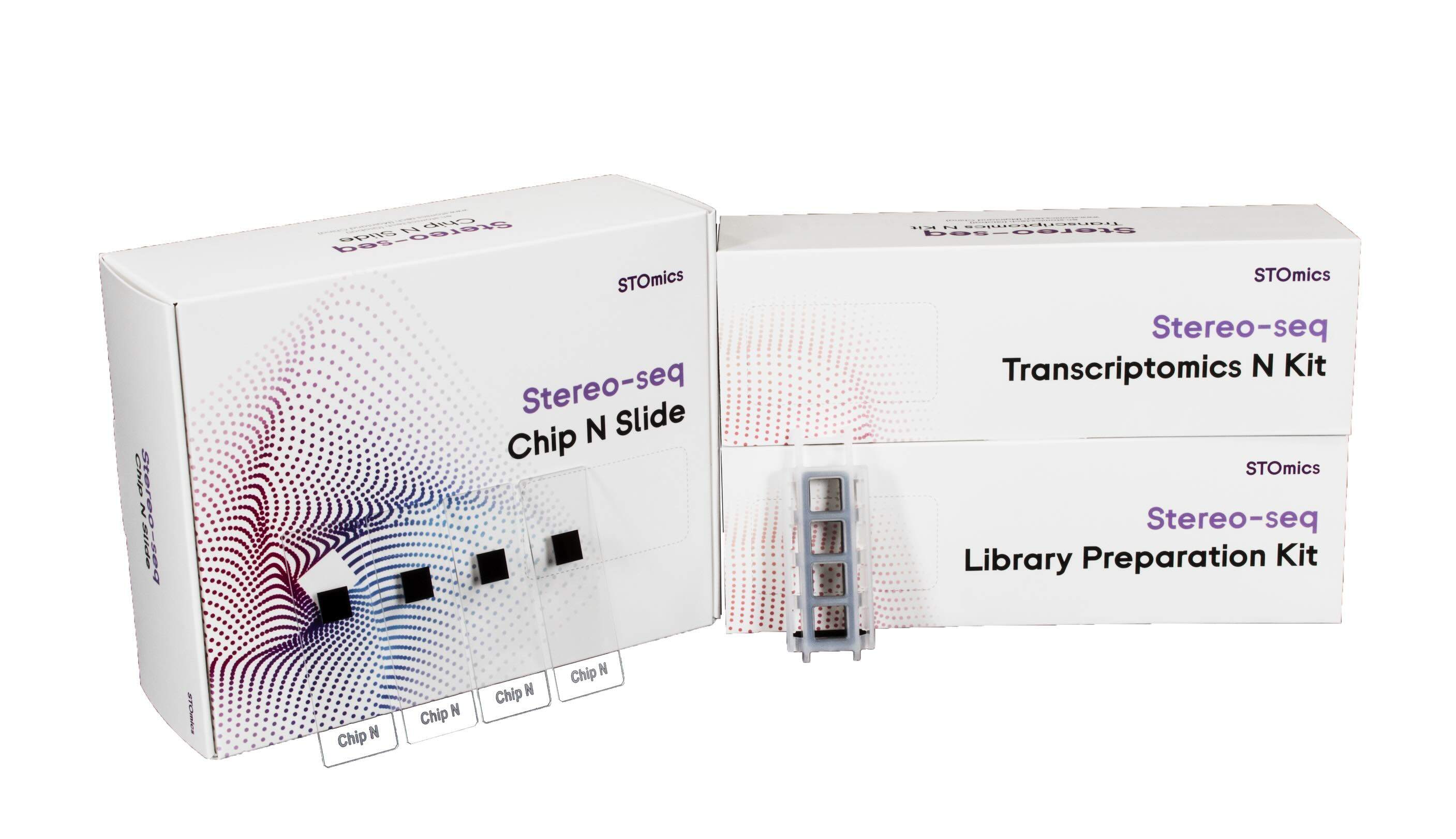
I write this as someone who has negotiated supply chains, coached pathology teams, and sat through late-night sequence runs; I know the hidden pains—fragmented archives, variable fixation, and misaligned expectations. Yet I am convinced we can recover meaningful biology from FFPE if we honor its constraints and measure what matters. For labs seeking a grounded partner and a path forward, consider the pragmatic solutions and data-driven pilots above — and when you are ready, look to stomics for further technical resources and platform options: stomics.