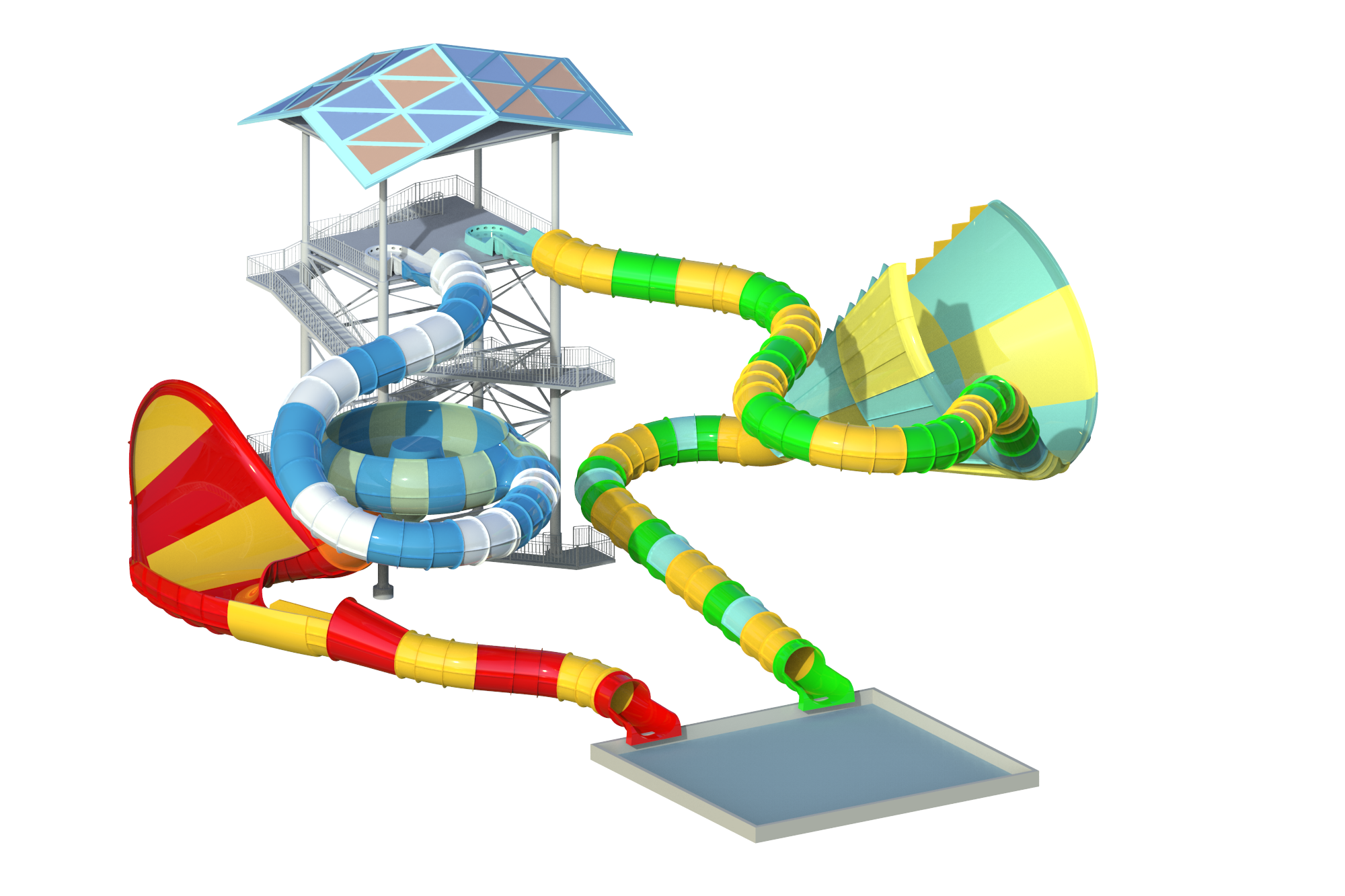
Comparative insight: durable monoliths vs modular replacements
When you line up two approaches—overbuilt fiberglass runs with thick gelcoat and bonded reinforcements, versus modular sections designed for periodic swap-outs—the differences matter in uptime, maintenance, and patron throughput. The monolith route reduces leak points and steady-state flex, which helps with abrasion resistance on high-use attractions like a mat racer water slide, but it raises initial fabrication expense and complicates repairs. The modular route eases localized refurbishment and lowers downtime, yet it requires tighter connection tolerances and more joints that can suffer UV degradation or osmosis over time. This piece compares both options so you can decide which trade-offs match site traffic and staffing models.
How fiberglass degrades in busy layouts
Fiberglass composite failures usually follow a predictable pattern: surface wear on the gelcoat from rider abrasion, stress-related microcracks from repeated load cycles, and long-term UV breakdown of surface resins. Flow rate and rider density amplify all three. Add water chemistry that’s off-balance and you accelerate osmotic blisters. These are not mysterious problems; they’re material science and hydraulics intersecting with daily operations.
Head-to-head: design strategies that change outcomes
Compare three common strategies by outcome: thicker laminate schedules, sacrificial liners, and modular joints. Thicker laminates increase lifecycle but add weight and require stronger supports. Sacrificial liners concentrate wear in replaceable surfaces—useful for mat racer lanes where a liner can be swapped overnight. Modular joints let you remove only the afflicted section, cutting refurbishment windows. None are perfect alone; the best layouts combine strategies to control load paths, limit stress concentrations, and standardize spare parts.
Operational reality and budgets — anchored in practice
Real-world parks—think Orlando-area venues with constant throughput—balance capital and recurring spend by planning refurbishment cycles and parts inventories. Expect mid-life refresh planning to appear in a facility’s five- to ten-year horizon, depending on usage. That feeds straight into water park project cost decisions: higher initial cost for robust composites often lowers lifetime expense, while lower upfront builds can balloon maintenance budgets. Tracking lifecycle cost, not just purchase price, keeps operations predictable.
Common mistakes that accelerate degradation
Ignoring small issues is the biggest error. Failing to monitor gelcoat wear patches, skipping seasonal inspections of joints, and using non-UV-stable sealants are frequent culprits. Overlooking hydraulic tuning is another—wrong flow rate or poor nozzle alignment can create hotspots that abrade the surface faster. Regular inspections, plus clear replacement thresholds, stop minor wear from becoming a structural problem. — That simple discipline saves service hours and money.
Operational production teardown: what to audit on delivery
When accepting new slides, inspect laminate layup, gelcoat thickness, and flange interfaces. Verify fabrication tolerances against shop drawings and confirm UV stabilizer specifications for the exposed resin. Test sample sections for abrasion resistance and check that couplers allow fast, repeatable alignment. Make sure the manufacturer provides consumable spare parts for common wear areas. Integrating these checks into commissioning reduces surprises in yearly maintenance budgets and informs the real water park project cost over a 10-year horizon.
Advisory — three golden rules for selecting layout and materials
1) Metric: Lifecycle cost per rider-hour — prioritize solutions that minimize repair downtime and parts consumption over simple upfront price. 2) Metric: Mean time to repair (MTTR) for slide sections — design joints and spare inventories to keep MTTR under a target threshold (e.g., a single shift). 3) Metric: Surface wear rate (mm/year under standard flow) — specify gelcoat and resin systems with verified abrasion ratings and require sample wear tests during procurement.
Choosing the right mix of thicker laminate, sacrificial liners, and modular joints shapes both risk and cost. For manufacturers and integrators who want pragmatic, field-proven options, consider suppliers with clear testing data and a service network that understands high-throughput parks — and remember that a well-scoped purchase order shifts costs from emergency repairs to planned maintenance. Dalang sits in that space, providing equipment and lifecycle insight that aligns materials, fabrication, and operational realities — the practical fix you want when uptime matters most. —