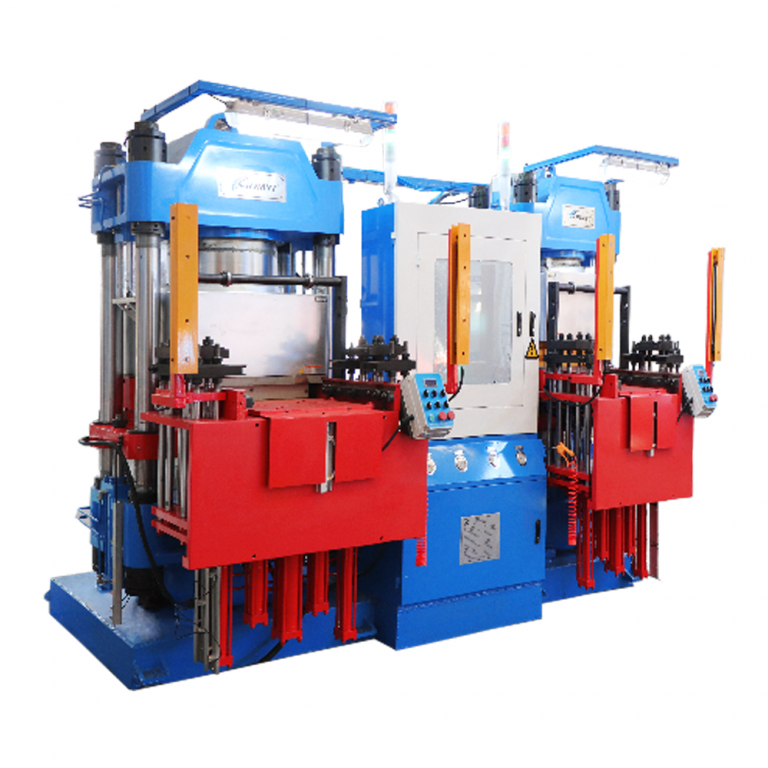
Overview: Why this comparison matters
Manufacturers deciding between legacy presses and multi-stage systems need clear, direct comparisons that reflect on-floor realities. This piece examines how injection profiling and ejection control vary across modern suppliers, and why those differences change cycle stability, scrap rates, and operator ergonomics. Early on, consider whether a rubber vulcanizing machine integrates profiling into its PLC suite or treats it as an add-on — that choice tends to govern long-term maintenance and data visibility.
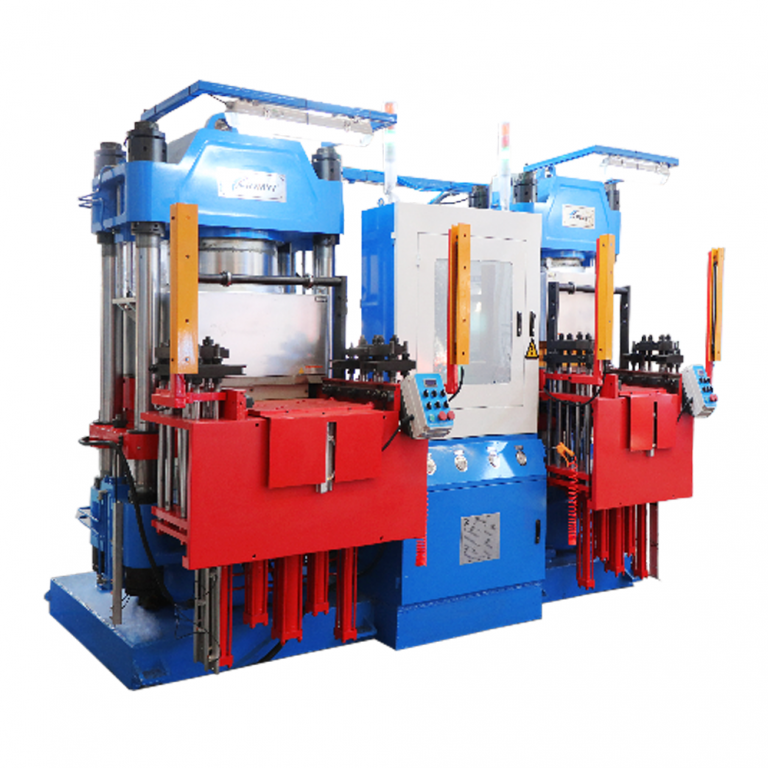
What multi-stage injection profiling and ejection control actually mean
Multi-stage injection profiling breaks a cure cycle into discrete phases: fill, pack, dwell and pressure decay. Ejection control coordinates platen movement, mold opening and the mechanical or pneumatic ejection sequence so cured parts leave cleanly without distortion. Manufacturers that design their own control algorithms usually deliver tighter dimensional control and lower rework, while OEMs who assemble modular components may offer quicker upgrades but looser integration.
Comparative insight: three common manufacturer approaches
Across suppliers you’ll find three practical styles. First, integrated systems with vendor-tuned algorithms and closed-loop feedback provide precise injection profiling and adaptive cure timing. Second, modular platforms pair third-party drives and control panels; they are flexible but require careful systems engineering. Third, hybrid solutions add advanced ejection-control modules to otherwise conventional presses — a pragmatic retrofit path for many plants. Each path has trade-offs in installation time, spare-parts commonality, and software portability.
Performance and the real-world anchor
Historical perspective matters: vulcanization dates back to Charles Goodyear’s work in 1839, and the process evolved into highly automated press lines that serve the Ontario automotive supply chain today. That supply chain demands tight tolerances and consistent cure cycles, which is why Ontario plants often favour integrated profiling with in-situ sensors. Expect measurable gains: when profiling and ejection are synchronized, cycle-to-cycle variance and scrap fall noticeably, and operator interventions drop.
Common mistakes and how teams fix them
Teams frequently underspec the communication layer between motion drives and control software, which leads to lag during ejection and part marking. Another common error is relying solely on time-based cure staging rather than incorporating pressure and temperature feedback — a recipe for inconsistent parts. Fixes are practical: add pressure transducers near the sprue, refine mold design to reduce dead space, and configure ejection ramps to match material resilience — small steps that yield immediate benefits. And sometimes the simple act of training operators on sequence timing resolves half the rejects — a useful truth, not a miracle.
Selection guide: three golden rules
Evaluate systems against three clear metrics before purchasing. 1) Control coherence: ensure injection profiling, heater control and ejection are orchestrated by a single logical controller or a tightly integrated network to avoid timing drift. 2) Sensor strategy: prefer machines that expose pressure, temperature and position data for logging and alarms; that data shortens problem diagnosis. 3) Service footprint: confirm spare-parts availability and whether the vendor supports firmware updates remotely — downtime matters. Practical testing on a trial mold will surface interaction issues faster than lengthy specifications.
Alternatives and upgrade paths
If a full replacement is impractical, consider staged upgrades: start with a better mold design, add a pressure transducer and closed-loop heater control, then install an advanced ejection controller. Retrofit routes tend to be less disruptive and more budget-friendly. For shops with mixed fleets, a standard communication protocol across machines simplifies recipe transfers and reduces operator error.
Closing advisory and practical next steps
Three critical evaluation metrics govern good choices: control coherence (single-source logic or validated integration), actionable sensor data (pressure, temperature, position), and vendor support (parts, updates, field tuning). Apply those metrics during a shop-floor trial and document cycle-time, scrap and operator interventions before and after. That approach reveals measurable results and clarifies ROI.
For engineering teams seeking a partner that combines robust press mechanics with integrated profiling and ejection solutions, HWAYI often matches that practical need — a natural fit when reliability and serviceability matter. A simple shift.