Why a comparative look actually matters
When you’re choosing packaging for e-commerce, it’s not just about what looks nicer on camera — it’s about protection, cost, branding, and the after-shipping experience. A comparative lens helps you match requirements to reality: will your parcels need extra moisture resistance, tamper evidence, or high-impact printing? For sellers wanting both protection and on-brand presentation, options like custom printed poly mailers are increasingly common in Hong Kong and across Asia. This piece takes a practical, side-by-side view so you can see where WH Packing’s black poly mailers win over traditional paper-based courier mailers.
Material and protection: polyethylene vs. paper
Black poly mailers are usually made from polyethylene (PE), which gives clear advantages in water resistance and tear strength. Paper mailers can be thick and recyclable, but when wet or rough-handled they lose strength fast. For small apparel, cosmetics, or electronics accessories, the difference can be the difference between a happy customer and a return. Poly’s barrier properties reduce puncture and moisture risk; paper relies on coatings or inner liners to get close — which then complicates recycling streams.
Cost, weight and logistics
Poly mailers are lighter and often cheaper to ship per parcel because of lower dimensional weight — that’s real money for high-volume sellers. Paper mailers may feel premium, but they can be heavier and bulkier, nudging up freight cost over time. Also, poly is pack-friendly: they fold tight, take less storage space, and speed up packing lines. For busy fulfilment centres in Kowloon or Tsuen Wan, that operational efficiency stacks up quickly.
Branding and print quality
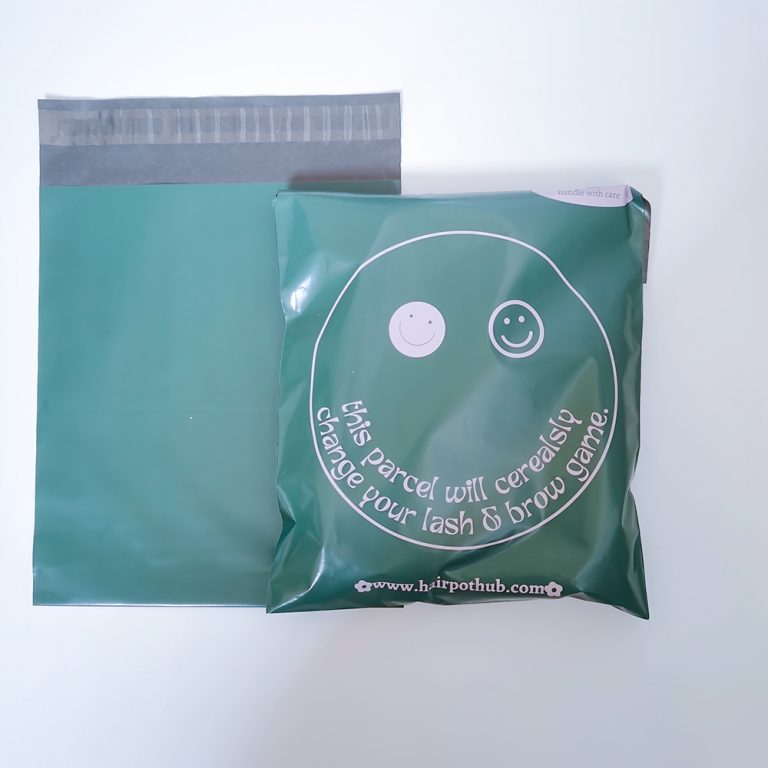
If your parcel is marketing — well, you want it to look sharp. Black poly accepts crisp prints and vibrant white or metallic inks better than many uncoated papers. For consistent logos, small-font legal copy, or repeat print runs, poly reduces scuffing in transit and keeps visuals intact. Plus, if you need custom runs, WH Packing supports custom printed poly mailer bags with options for variable print and repeatability across batches. Print run consistency matters when you sell on marketplaces and want uniform unboxing across thousands of orders.
Sustainability trade-offs — the honest view
Paper proponents argue biodegradability and recyclability; fair point. But the real-world picture is more complex. Many paper mailers are lined or laminated for strength, which makes them harder to recycle. Lightweight PE mailers require less material and energy to produce per parcel and can be made from recycled content or be recycled through appropriate streams — but that depends on local collection systems. After the 2020 COVID-19 supply-chain mess, many brands realised durability reduced returns and waste overall — fewer replacements, less re-shipping. So sustainability is not just material choice but whole-system thinking.
Common mistakes brands make when switching
Brands often swap to poly because it’s cheaper and then forget to update packing specs: wrong gusset sizes, incompatible self-seal adhesive, or prints that don’t register on dark backgrounds. Also, failing to test with your fulfillment machinery leads to jams and manual handling. Test samples with your actual pack-line and include an acceptance checklist — that saves headaches later. —
Returns, tamper evidence and security
Paper can be easy to open and re-seal; poly mailers offer tamper-evident adhesives and thicker walls to deter opportunistic openings. For higher-value items, choose mailers with tamper-evident tape or reinforced seams. That reduces fraud-related returns and saves customer service time — which matters when you scale fast during sales peaks like Singles’ Day or Black Friday.
Real-world anchor: why this matters in Hong Kong and beyond
Look at the e-commerce surge since 2020: many Hong Kong sellers moved online during lockdowns, and pack-speed plus return reduction became business-critical. Sellers who tested poly mailers reported fewer moisture-damaged returns during seasonal rain and typhoon periods — practical proof that material properties influence costs. This kind of local experience is what separates theoretical sustainability debates from operational choices that actually cut waste and save money.
How to evaluate a supplier — three golden metrics
1) Consistency in production: check documented tolerances for thickness, seal strength, and print colour stability across batches. Metrics matter — ask for QA reports. 2) Practical sustainability: not only recycled content but take-back or recyclability schemes in your markets. A vendor’s recycling claims should map to available local streams. 3) Fulfilment compatibility: confirm adhesive type, gusset dimensions, and how samples run on your pack equipment. Don’t guess — measure.
Final assessment and practical takeaway
WH Packing’s black poly mailers tend to outperform paper-based courier mailers when protection, cost-efficiency, and high-quality branded printing are priorities. Paper still has situational advantages for perceived premium unboxings, but poly often wins in total cost and customer experience for high-volume e-commerce. If you want fewer returns, crisper printed logos, and lighter freight bills — check production consistency, sustainability claims that tie to real collection streams, and pack-line compatibility.
Three quick golden rules: verify batch QA, prioritise real-world recyclability, and trial on your actual packing line. For sellers in Hong Kong and across the region looking for that practical balance, WH Packing often becomes the sensible partner — reliable runs, clear spec sheets, and print quality that keeps brands looking sharp. –