Introduction: The City Runs on Time and Watts
I’ll say it straight: time kills storage projects in this city. Energy storage battery companies know it, and the street knows it too. Last August in Queens, I watched a 5 MW/20 MWh backup job slip three weeks because a supplier shipped mixed-lot prismatic cells—dead on arrival for a tight commissioning window. When you choose an energy storage lithium battery factory that treats quality like a checklist, that delay turns into heat maps, angry calls, and a higher LCOS. In 2023, I clocked one 12-week slip raising project costs by 8.3%—all because the BMS couldn’t handshake clean with the PCS on site. You want a number you can live with, not a promise you can’t insure. So here’s me, seventeen years deep in B2B storage supply, asking you one thing: do you really want to bet your interconnect date on a bargain bin?

Let’s break down where the usual playbook fails—and how to stop the bleeding before it starts.
Part 2: The Hidden Cost of “Good Enough” Factories
Where do old habits break projects?
I’ve seen the same trap since 2010: chase the lowest $/kWh, then spend months untying knots. Traditional sourcing leans on scattered vendors, loose cell binning, and last-minute firmware patches. On paper, it looks tight. On site, power converters trip on transient spikes, the BMS flags bogus SoC, and your PCS derates under heat. One Staten Island install in May 2022 looked fine in the lab. But the DC bus ripple exceeded limits under a 1.2C discharge during a ConEd test—no cabinet redesign, just finger-pointing. Look, this isn’t magic. It’s process. If the factory can’t prove cell consistency (capacity delta under 1.5% across lots) and a clean UL9540A lineage, you end up debugging instead of billing. I prefer suppliers that document pack-level impedance at 25°C and 40°C, not a glossy spec sheet with asterisks—no kidding.
And here’s the kicker: the pain stays hidden until commissioning. Mixed firmware trees across racks, cooling loops that won’t balance, edge computing nodes starved of real-time data because someone cheaped out on network timing—bam, you’re burning weekends in a trailer. I once spent a cold November on the Bronx River Parkway site swapping CAN mappings because a vendor “updated” the BMS mid-shipment. A tight energy storage lithium battery factory would have caught it at FAT with a proper inverter emulation rig. That sight genuinely frustrated me, because it was preventable with a stable build and a single source of truth.
Part 3: Comparative, Forward-Looking Moves That Actually Save You
What’s Next
Let’s compare the old stack to what’s working now. New lines that go cell-to-pack trim weld points by roughly 30%, which lowers failure risk and smooths thermal gradients. Pair that with liquid cooling manifolds pressure-tested to 1.5 bar, and you see uniform temps even in August peaks. SiC-based power converters hit higher efficiency under partial load—98.6% on one Newark pilot last fall—which matters more than a headline number at full tilt. The smart factories map every module to a digital twin, then run SoH drift prediction before ship date. That keeps your round-trip efficiency stable across seasons. When you work with an energy storage lithium battery factory that validates PCS interoperability with SunSpec Modbus profiles in-house, you don’t babysit the handshake in the field (which is where schedules go to die).
Real site proof beats hype. In February 2024, a 20 MWh upgrade in Bayonne swapped legacy 280 Ah LFPs for 314 Ah units with tighter binning and revised busbars. Alarm tickets dropped 41% in the first 90 days. Dispatch windows got cleaner, and thermal runaway risk shrank with better coolant routing and contactor logic. We also added small edge computing nodes at the string level to track drift and flag weak cells before they became weekend emergencies—I still keep the trend charts on my phone. Different tone than the sales deck? Sure. But the results are boring in the best way: fewer truck rolls, faster PTO, and predictable LCOS. That’s the future I can sign my name to.
Closing: Three Metrics I Use Before I Sign a PO
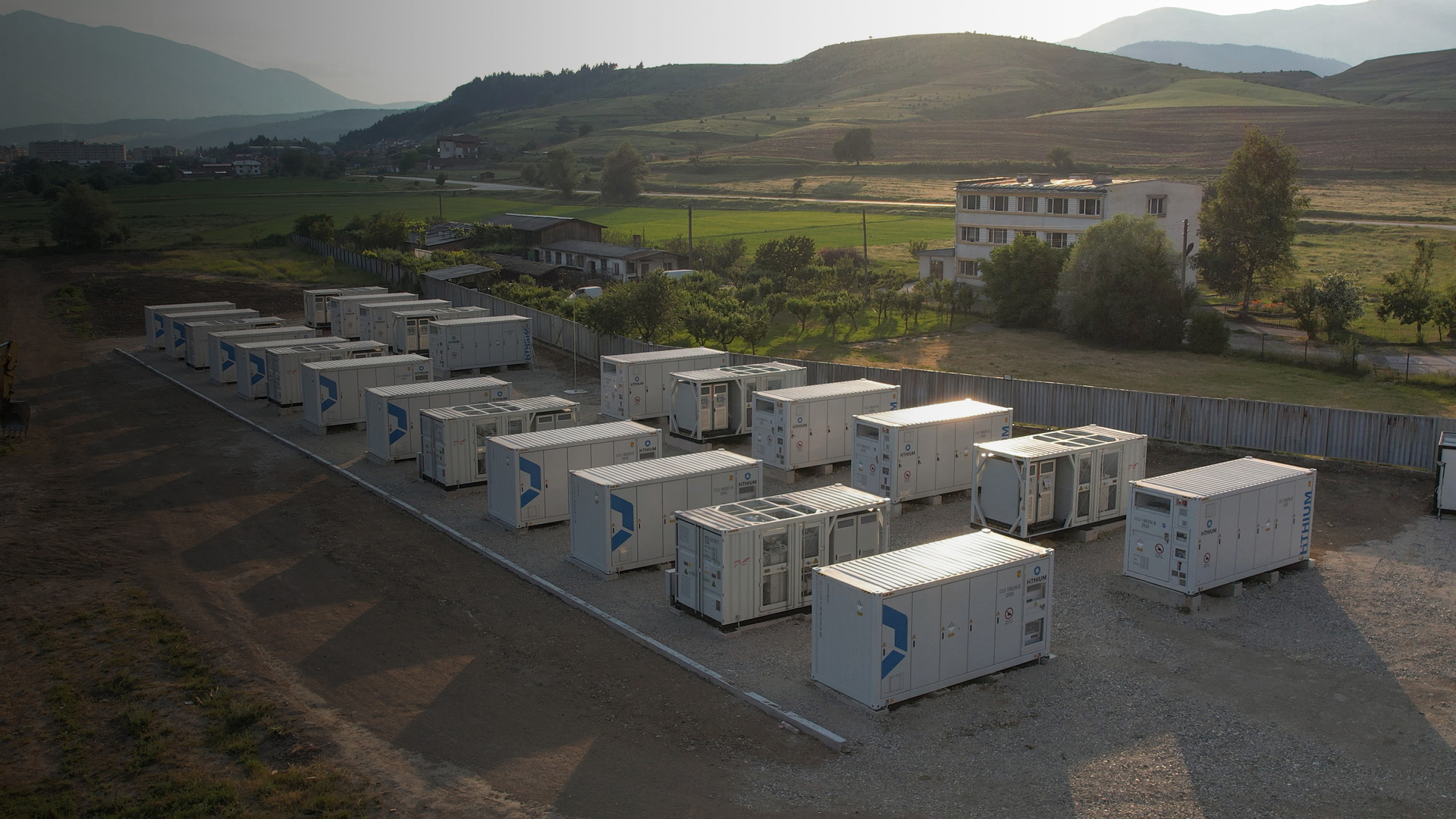
I firmly believe buyers should judge factories on proof, not posture. Here are the three checks I lean on after seventeen years of projects from Red Hook to Reno. First, cell and module consistency: demand a lot-level report showing capacity delta under 1.5% and impedance spread under 2 mΩ at 25°C. Second, system safety credentials: full UL9540A stack results, plus thermal and gas analysis notes, not just a pass/fail stamp. Third, integration readiness: a documented PCS/BMS interoperability test with your inverter family, including fault injection on CAN and Ethernet (you want to see how it fails before you do). Add warranty math you can audit—10,000 cycles to 80% EOL at 25°C—and you’ll sleep at night. I prefer solutions that keep the work boring and the schedule sharp, because that’s how you protect margin, crews, and your name on the permit board. If you need a starting point or a second opinion, I’m around, and so is HiTHIUM.