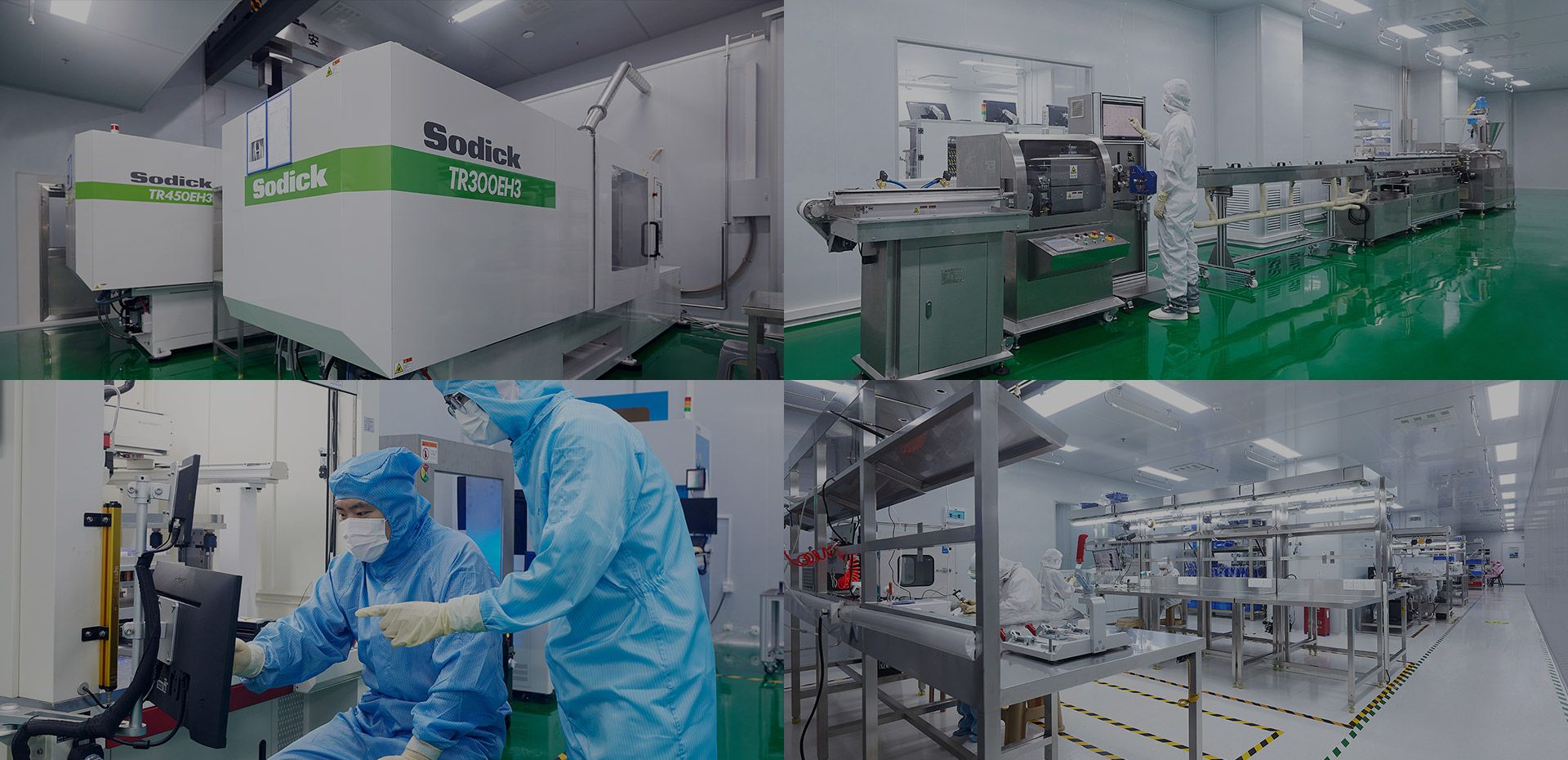
Problem: production fails when HVAC and process disagree
You need stable air, stable humidity, and repeatable particle control. Miss one variable and rejects rise. The problem repeats across small-batch medtech lines and large-volume pharm plants. I’ve seen purchasing teams chase cheaper filters while production lines needed better airflow control. If you source equipment through medical device sales, demand specifications that match process requirements, not only nominal filter ratings.
What the system must deliver
Define clear targets. Specify cleanliness class (ISO 14644-1), temperature tolerance, relative humidity range, and differential pressure setpoints. State required air changes per hour (ACH) and particle-count targets at rest and in-operation. List required redundancies: N+1 for fans and critical sensors, dual chilled-water circuits if the process is sensitive. Use ASHRAE and ISO terminology. Short, verifiable specs avoid ambiguity with suppliers.
Sizing: simple math, rigorous checks
Calculate required volumetric flow Q = (ACH × Volume) / 60. Convert to supply-plenum velocities that preserve laminar or turbulent patterns as needed. For ISO 5–7 zones, target unidirectional flows or controlled mixing; use face velocities for HEPA diffusers between 0.25–0.5 m/s for laminar transfers. Check heating/cooling loads with sensible and latent terms. Validate coil capacities for worst-case occupancy and equipment heat load. Don’t rely on rules of thumb alone—document the math and keep margins for filter loading.
Filtration and airflow pattern choices
Choose HEPA stage placement by contamination source. For particle-sensitive assembly, place final HEPA in the immediate process zone. For solvent-laden processes, add activated carbon pre-filtration and design for higher sensible load. Decide between fully unidirectional systems and localized laminar-flow enclosures. Remember: a properly placed HEPA with correct face velocity beats oversized AHUs with poor diffuser layout.
Controls, sensors, and monitoring architecture
Control loops must be deterministic. Use pressure transmitters with local displays at room thresholds. Place particle counters at representative locations: near operator positions and at critical equipment outlets. Use differential-pressure averaging across the room envelope, not a single point. Specify alarm levels and automated responses—soft alarm for drift, interlock for excursions beyond acceptance. Log data with secure timestamps; make logs part of the validation package.
EEAT: field-proven methods and a real-world anchor
I designed HVAC for multiple assembly lines after presentations and case studies from MD&M West (Anaheim) shaped best practices for medtech production. Follow ISO 14644-1 for cleanroom classification and ASHRAE guidance for ventilation; those are measurable references. For localized contamination control, evaluate the medical device assembly machine layout early in HVAC layouts—tooling and conveyors change airflow paths. Document hands-on tests during factory acceptance and on-site commissioning. That process-driven evidence supports design decisions and prevents late-stage surprises.
Common mistakes to avoid
Do not size HVAC only by ACH. ACH is insufficient without validated flow patterns. Avoid placing returns opposite supply diffusers across equipment that creates wakes. Don’t neglect access for filter replacement and differential-pressure measurement. Skip commissioning and you will find unbalanced rooms, incorrect setpoints, and non-conforming documentation when regulators inspect. Plan maintenance access and training during design.
Alternatives and trade-offs
If full-room cleanrooms are cost-prohibitive, consider isolators, RABS, or local laminar-flow enclosures for critical steps. These reduce conditioned volume and lower energy use but require integration with exhaust and utility lines. Compare lifecycle costs: initial capex versus operational energy and maintenance. For high-mix, low-volume production, modular walls and portable HEPA units can provide flexibility with measurable trade-offs in control tightness.
Commissioning and validation checklist
Balance supply and return to achieve setpoint differentials. Record particle counts at rest and in operation. Verify temperature and humidity under load. Run smoke tests to confirm flow patterns. Produce a final report with as-built drawings, sensor calibration certificates, alarm setpoints, and maintenance schedules. Require a remedial plan for any marginal results before signing off.
Decision clarity for procurement and operations
Prioritize measurable requirements over vendor promises. Tie procurement specs to acceptance tests. Expect to iterate: ductwork and diffuser layout changes during commissioning are normal. When HVAC design aligns with equipment footprint, changeovers become predictable and rejects fall. For integrated projects where assembly, HVAC, and process controls must mesh, consider partners with combined experience—companies like kingsin often bring practical, documented solutions that reduce iterative rework and keep production stable.