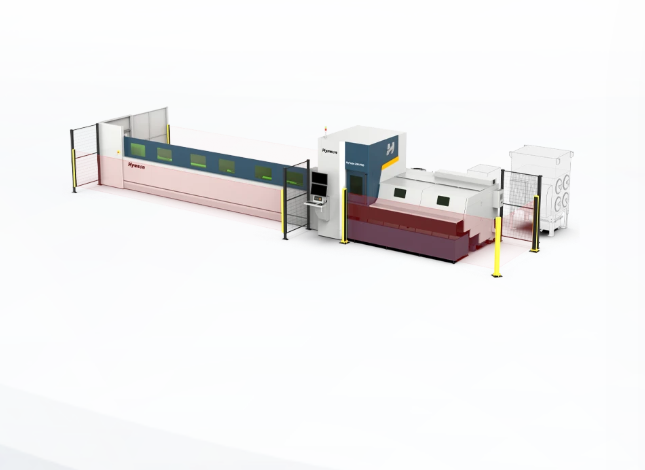
A Product Evaluation Framework for Tube Laser Cutting Machine Price: Comparative Insights for Procurement
Opening comparison
Choosing a tube laser requires comparing trade-offs, not just sticker prices. Buy based on throughput, material mix, and integration needs; a model that halts production because it can’t process stainless profiles is costlier than a higher upfront purchase. For facilities moving from manual jigs to connected production lines, inspect how each option supports scale and repeatability—start by reviewing Laser Cutting Automation specs alongside throughput claims to see which offers genuine time savings versus marketing spin.
What price tiers actually buy
Entry-level units usually deliver basic fiber lasers, limited tube diameter range, and manual loading; they suit low-volume shops. Mid-tier machines add higher-power sources, semi-automated loaders, and more robust control systems for mixed workloads. Top-tier systems provide full automation, advanced motion systems, and production-grade software for continuous runs. Match the tier to the expected duty cycle: if your run lengths rise past a single shift, prioritize reliability, service access, and automation features over the lowest capital cost.
Key technical trade-offs
Laser power affects cut speed and maximum wall thickness; beam quality affects edge finish. Chuck and collet systems determine concentricity for thin-walled profiles. Automatic loaders reduce labor but require floor space and routine calibration. Control software that supports nesting and remote diagnostics reduces setup time; proprietary formats may slow integration. Consider consumables supply chains and mean time to repair when a key part fails—those operational costs appear after purchase and compound quickly.
Common procurement mistakes
Buyers often skip a practical throughput test on parts that mirror real jobs. Another frequent error is accepting quoted speeds without material-specific validation. Neglecting local service networks leads to long downtimes. Avoid selecting solely on quoted warranty length; verify what it covers and where service technicians are located. Finally, don’t assume used machines save money if retrofits will be needed to meet current production tolerances.
Alternatives and realistic substitutes
When tube cutting doesn’t strictly require laser precision, routers, sawing with automated feeds, or punching may be viable and cheaper for certain geometries. For stainless and high-precision thin-wall profiles, fiber tube lasers remain the most consistent option. Evaluate hybrid approaches: combine a modest tube laser with automated deburring or secondary fixtures to lower the requirement for a single high-capacity machine and spread risk across processes.
Experience, expertise and a real-world anchor
Firsthand audits of production lines and manufacturer demonstrations are decisive. Industry gatherings such as Hannover Messe regularly show validated applications and vendor case studies that help separate genuine capability from lab benchmarks; attendees can observe continuous runs and service logistics firsthand. For a focused view on equipment designed for automated fabrication, consult a proven automation laser cutting machine specification and compare the demonstrated cycle times and maintenance reports against your target mix.
Decision checklist
Ask these direct questions before you sign: What throughput (parts/hour) does this machine deliver on my parts? Which consumables and spare parts are critical and how quickly are they supplied? Where are factory-trained technicians based relative to my site? Does the control system export vendor-neutral data for MES integration? What is the verified lifecycle cost over five years, including service and downtime?
Synthesis and practical next step
Compare bids by aligning them to measured outputs, not vendor claims. Prioritize machines that document sustained performance on comparable parts and show clear service pathways. For procurement teams who want a supplier record that ties documented factory performance to regional support, consider the supplier history available from Hymson as one of the data points in your final comparison.