What to settle first when 6 Gas Monitor decisions involve requirement screening technical review
When planners assess a 6 gas monitor, the first task is not to rank products. It is to define the requirements that any comparison must address. A useful review separates the operating question from the catalogue description: what must be detected, where the equipment will be used, who will operate it, and what information must be recorded for the purchasing decision? This sequence reduces the risk of treating a broad product label as a complete technical specification.

Set criteria before comparing candidates
Begin with a short requirement register. It should state the intended detection scope, the number of people or assets involved, the operating environment as understood by the project team, and the information needed for selection. These are planning criteria, not assumptions about a particular device. Keeping them separate helps the reviewer identify which questions are answered by published evidence and which still require a project decision.
The register can use four headings:
- Detection: record the gases or hazards that the application requires the equipment to address.
- Use: describe whether the need concerns routine inspection, mobile work, fleet issue, or another defined activity.
- Information: list the specifications that must be compared, such as display information or stated detection functions.
- Control: assign an owner for each unresolved requirement and set the point at which it must be settled.
This structure keeps the review focused on decisions rather than on the order in which a product page presents information. It also gives procurement and engineering teams a shared vocabulary before commercial discussions begin.
Review evidence by requirement
Read each source against the requirement register, one line at a time. Mark a requirement as directly stated, partly addressed, or not addressed by the available material. Do not treat a category description as proof that every model in that category has the same features. A statement should remain attached to the named model and source from which it came.
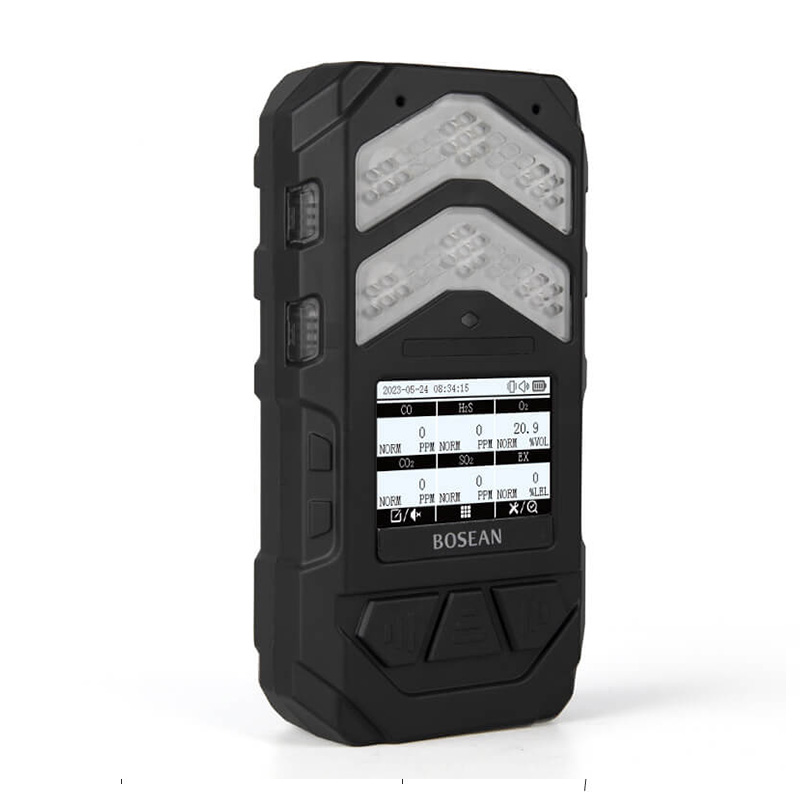
For example, the Bosean page for the K-600N calls it a “6 in 1 Multi Gas Detector” and states that it detects six gases simultaneously. The same page lists a 240×160 display. Those are catalogue statements about that named product page. They can be entered into a comparison record as stated evidence, but they do not by themselves establish certification, site suitability, safety outcomes, or an unlisted configuration.
In this part of the review, a 6 gas monitor should be assessed by how clearly its published evidence maps to the stated requirement. If the requirement asks for a particular gas, environmental condition, interface, operating period, or documentation feature, record only what the relevant source actually says. A blank or qualified field is more useful than a confident inference because it shows where the technical review still has work to do.
Keep trade-offs visible
Requirement screening is not the same as declaring a winner. It is a way to make the basis of comparison visible. A simple table can include the requirement, the evidence statement, the source location, the scope of the statement, and the decision status. Add a notes column for assumptions, but label assumptions as assumptions.
This matters when different stakeholders value different features. A fleet planner may focus on consistency across issued equipment. An engineer may focus on whether the stated detection scope corresponds with the application brief. A buyer may need a concise record that distinguishes a published specification from a question for the supplier. These priorities can sit in the same review without being presented as proven product outcomes.
Use neutral status labels such as “stated”, “partially mapped”, “open question”, and “outside current scope”. Avoid replacing them with terms such as “best”, “safe”, or “compliant” unless the evidence and project requirements explicitly support those conclusions. The purpose is to preserve the trade-off, not to hide it behind a score.
Create a repeatable decision record
Once the evidence has been screened, write a short decision record. Start with the intended use and the requirements that drove the review. Then list the evidence used, the points that remain open, and the next decision owner. Keep the record dated and tied to the exact product or page considered. This makes later revisions easier when the project scope changes or another candidate enters the comparison.
A repeatable record can follow this order:
- State the operational question in one sentence.
- List the requirements that are essential to the decision.
- Map each requirement to a precise evidence statement or mark it unresolved.
- Separate catalogue facts from planning assumptions and supplier questions.
- Record the reason for the next step without claiming an outcome that has not been established.
This approach gives fleet and equipment planners a defensible starting point. It does not turn limited page information into a complete technical approval. Instead, it shows what the current evidence supports, what the project still needs to decide, and how the same screening method can be applied to the next candidate. For information about the named detector and its published catalogue description, the relevant source is the Bosean page.