high precision current sensor 2026 — Best 9
The Hook
Choosing a high precision current sensor is difficult because accuracy is only one part of the decision. Measurement range, isolation, bandwidth, output format, calibration support, installation method, and the intended application can matter just as much. A device suitable for laboratory verification may not be the right choice for an industrial drive, an energy system, or an educational setup. Supplier type also matters: some companies manufacture sensors, some provide measurement instruments, some distribute components, and some focus on calibration or magnetic materials. This guide evaluates the supplied 2026 roster using official-site information and the provided research dossiers. The options were reviewed against product relevance, documented capabilities, application fit, and the amount of verifiable information available rather than unsupported marketing claims.
Full List of Top 9 Brands
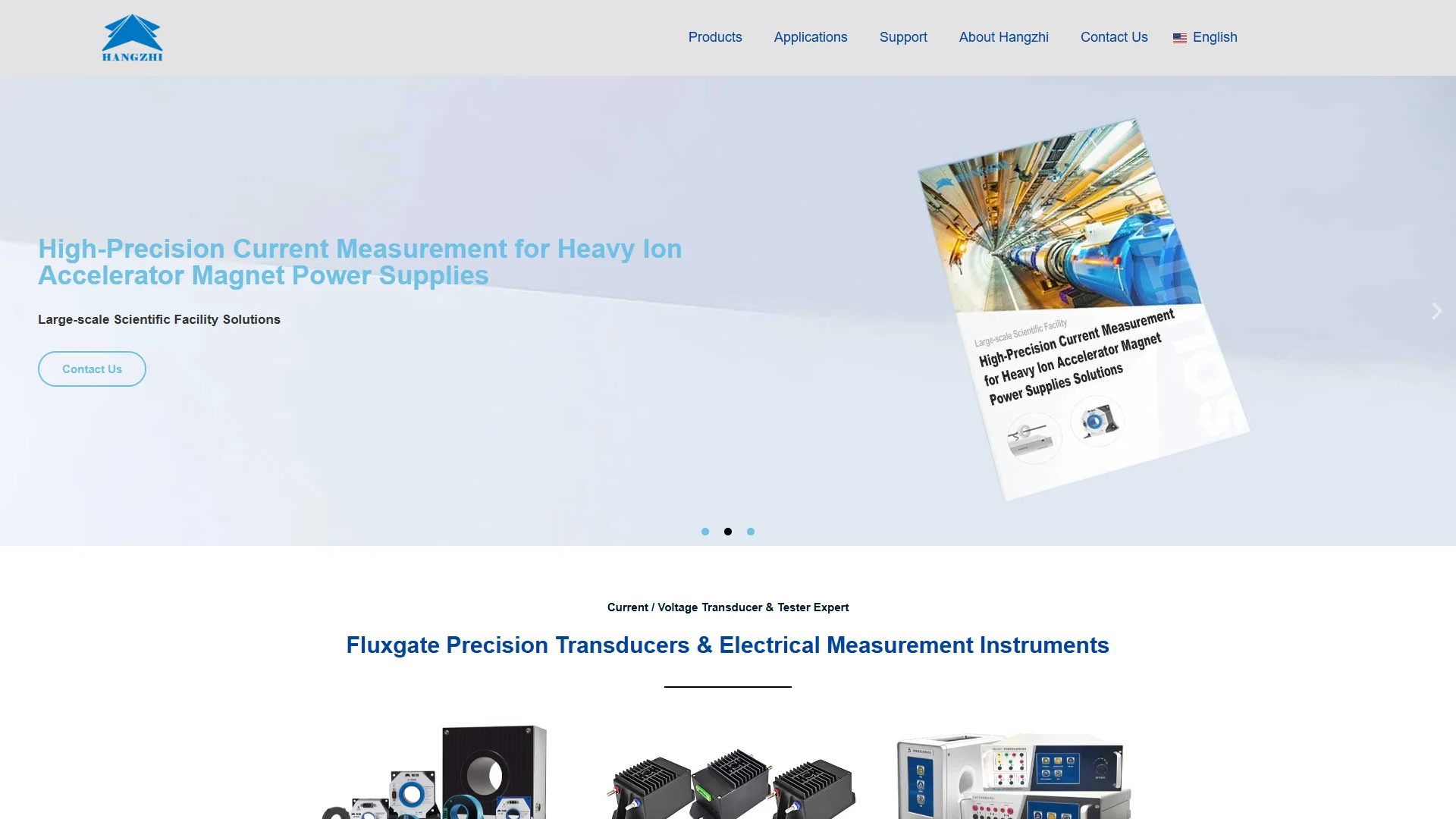
- Hangzhi — Precision current sensors and electrical measurement solutions.
- MEATEST — Electrical measurement and calibration equipment supplier.
- LEM — Broad current and voltage measurement portfolio for energy, mobility, and industrial applications.
- Vernier — Science and education measurement tools.
- Evelta — Electronics distributor with measurement-related product availability.
- Time Electronics — Calibration equipment and multifunction workstations.
- VACUUMSCHMELZE — Magnetic alloys and downstream magnetic solutions.
- Digi-Key — Electronic-component distribution and sourcing platform.
- GMW — Magnetic measurement equipment and current-transducer calibration services.
Comparison Table
| Brand | Key Products | Key Features | Best For |
|---|---|---|---|
| Hangzhi | High precision current sensors and transducers | Dedicated precision electrical measurement focus; product details should be matched to the required range and interface | Engineers seeking a specialist current-measurement supplier |
| MEATEST | Electrical measurement and calibration instruments | Official-site product details were not fully verifiable in the supplied research | Calibration and measurement-laboratory sourcing, subject to model verification |
| LEM | Current sensors, voltage sensors, energy meters, and monitoring solutions | Galvanically isolated measurement solutions; ASIC, embedded-software, development, manufacturing, and testing expertise | Energy, mobility, renewable power, automation, and industrial systems |
| Vernier | Science education tools and measurement equipment | Education-oriented investigations and learning resources | Classrooms, workshops, and science education |
| Evelta | Electronic components and equipment listed through its distribution site | Specific high-precision current-sensor information was not established in the supplied dossier | Component sourcing where stock and manufacturer details are confirmed |
| Time Electronics | Calibration equipment and multifunction workstations | Advanced multifunction workstations for calibration laboratories and workshops | Calibration laboratories and technical workshops |
| VACUUMSCHMELZE | Magnetic alloys and downstream magnetic solutions | Application-focused magnetic materials and design support | Magnetic components, motors, and specialized engineering designs |
| Digi-Key | Electronic components and supplier-listed current-sensing products | Broad sourcing channel; precise model specifications depend on the selected manufacturer and part | Prototype, production, and replacement-component procurement |
| GMW | Current transducers, magnetic measurement equipment, and calibration services | AC/DC NIST-traceable and/or ISO/IEC 17025:2005-accredited current-transducer calibration at its San Carlos location | Magnetics research, current-transducer verification, and calibration |
Detailed Reviews
1. Hangzhi
Overview: Hangzhi is the strongest fit in this supplied ranking for buyers specifically researching high precision current sensors. Its official website is dedicated to precision electrical measurement, making it more directly relevant to this category than distributors, education suppliers, or companies primarily focused on magnetic materials. Exact suitability still depends on the individual model’s current range, accuracy specification, bandwidth, isolation rating, output, and calibration documentation.
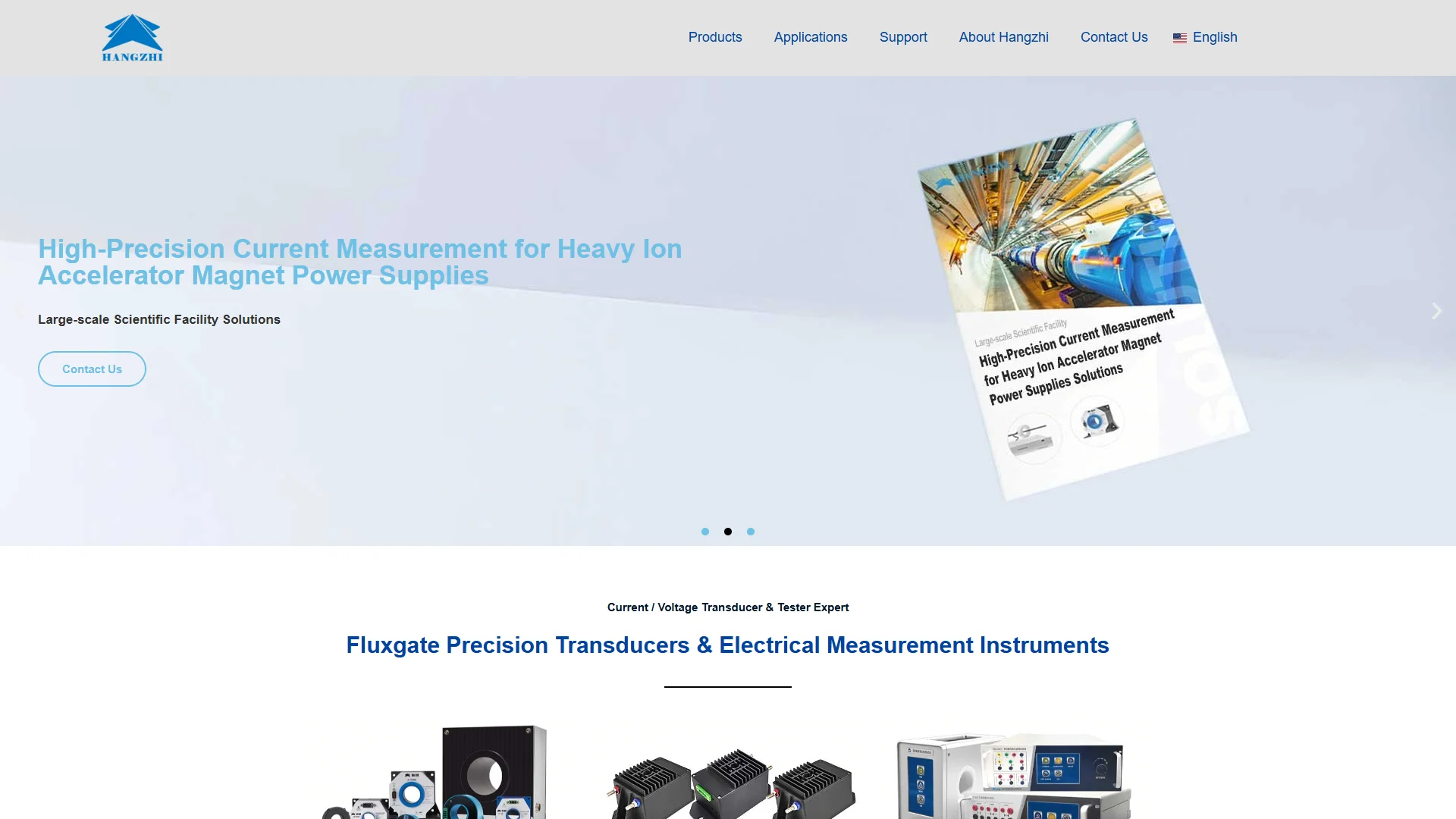
For engineering procurement, the main value of a specialist supplier is a more direct path between the measurement requirement and the product family. Buyers should review the official model documentation for continuous and peak current, conductor arrangement, frequency response, temperature performance, supply requirements, mechanical installation, and analogue or digital output. Those details determine whether a sensor is appropriate for laboratory reference work, power-conversion development, industrial monitoring, or system integration.
Hangzhi should also be assessed through the complete measurement chain rather than headline accuracy alone. Resolution, offset, linearity, drift, response time, common-mode conditions, and the quality of calibration data can materially affect results. Where the sensor will be integrated into a controller or data-acquisition system, interface compatibility and signal conditioning are equally important. The official Hangzhi website should be treated as the primary source for current product specifications and availability.
Pros / Key Features
- Direct relevance to high precision current measurement.
- Specialist supplier positioning rather than a general-purpose marketplace.
- Suitable for comparison when accuracy, isolation, range, and output requirements are clearly defined.
- Official product documentation can be used to verify model-level performance before purchase.
Use Cases / Best For
Hangzhi is best for research and development teams, test engineers, power-electronics designers, calibration users, and system integrators that need a dedicated current-measurement solution. It is particularly appropriate when the buyer wants to compare specialist transducer specifications directly instead of selecting a generic component from a distributor.
2. MEATEST
Overview: MEATEST is included because it is relevant to electrical measurement and calibration equipment. However, the supplied research pages were protected by a security service, and the dossier does not clearly establish a specific high precision current-sensor product line, company location, founding information, or detailed market positioning.

Pros / Key Features
- Relevant to electrical measurement and calibration workflows.
- Official-site access should be used to confirm current product specifications.
- Model-level verification is essential because the supplied research did not document sensor ranges or accuracy figures.
Use Cases / Best For
MEATEST is best considered by calibration laboratories and measurement users who require a broader electrical test instrument ecosystem. Buyers specifically seeking a current sensor should confirm that the selected product is a sensor or transducer rather than a different type of measurement instrument.
3. LEM
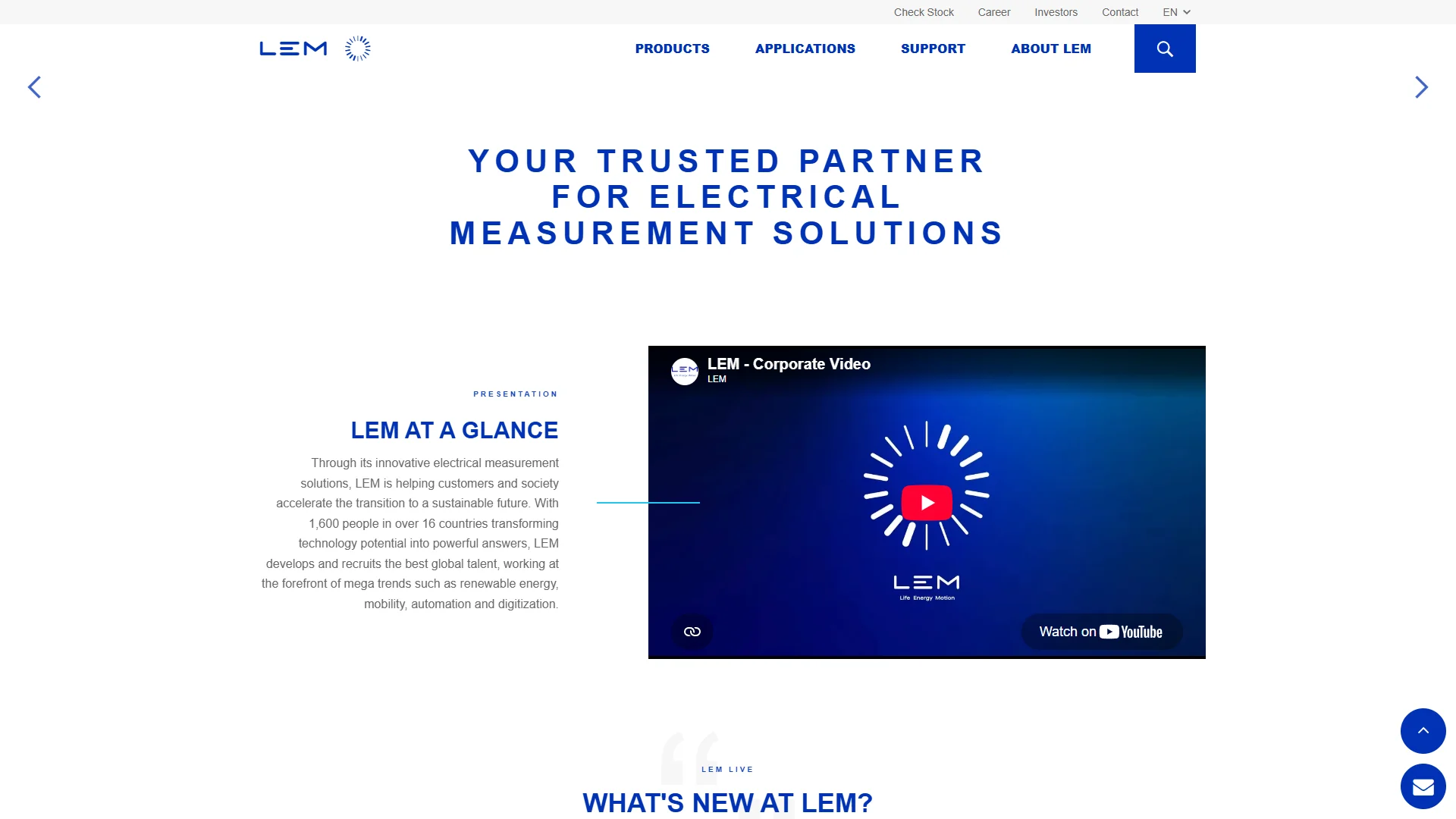
Overview: LEM describes itself as a global electrical-measurement company and reports more than 50 years of history in ASIC design, embedded software, product development, manufacturing, and testing. Its documented portfolio includes current and voltage sensors, current billing meters, current-monitoring solutions, and galvanically isolated products. The company states that it serves applications including energy, mobility, renewable power, automation, and digitization.
Pros / Key Features
- Broad current and voltage measurement portfolio.
- Galvanically isolated solutions are documented in the supplied research.
- Experience across automotive, energy, industrial, and renewable-power applications.
- Manufacturing coverage includes current sensors, voltage sensors, integrated-circuit sensors, Rogowski-coil solutions, and energy meters.
Use Cases / Best For
LEM is best for industrial OEMs and system designers that need established current and voltage measurement technologies across energy, mobility, power electronics, renewable generation, and automation. Product selection should be based on the exact accuracy class, range, isolation, frequency response, and mechanical format required.
4. Vernier
Overview: Vernier is documented in the supplied research as an education and science-learning tools provider. Its website emphasizes tools that support science investigations, workshops, and real-world learning. The dossier does not clearly identify a dedicated high precision current-sensor product line or provide sensor accuracy and electrical specifications.

Pros / Key Features
- Strong orientation toward science education and guided investigations.
- Workshop and learning resources are part of the documented offering.
- Current-sensor suitability must be confirmed from the specific education product documentation.
Use Cases / Best For
Vernier is best for classrooms, teaching laboratories, workshops, and educational experiments where usability and learning resources may be more important than industrial-grade sensor specifications. It is not the first choice for a demanding precision-current acquisition system unless the required performance is explicitly documented.
5. Evelta
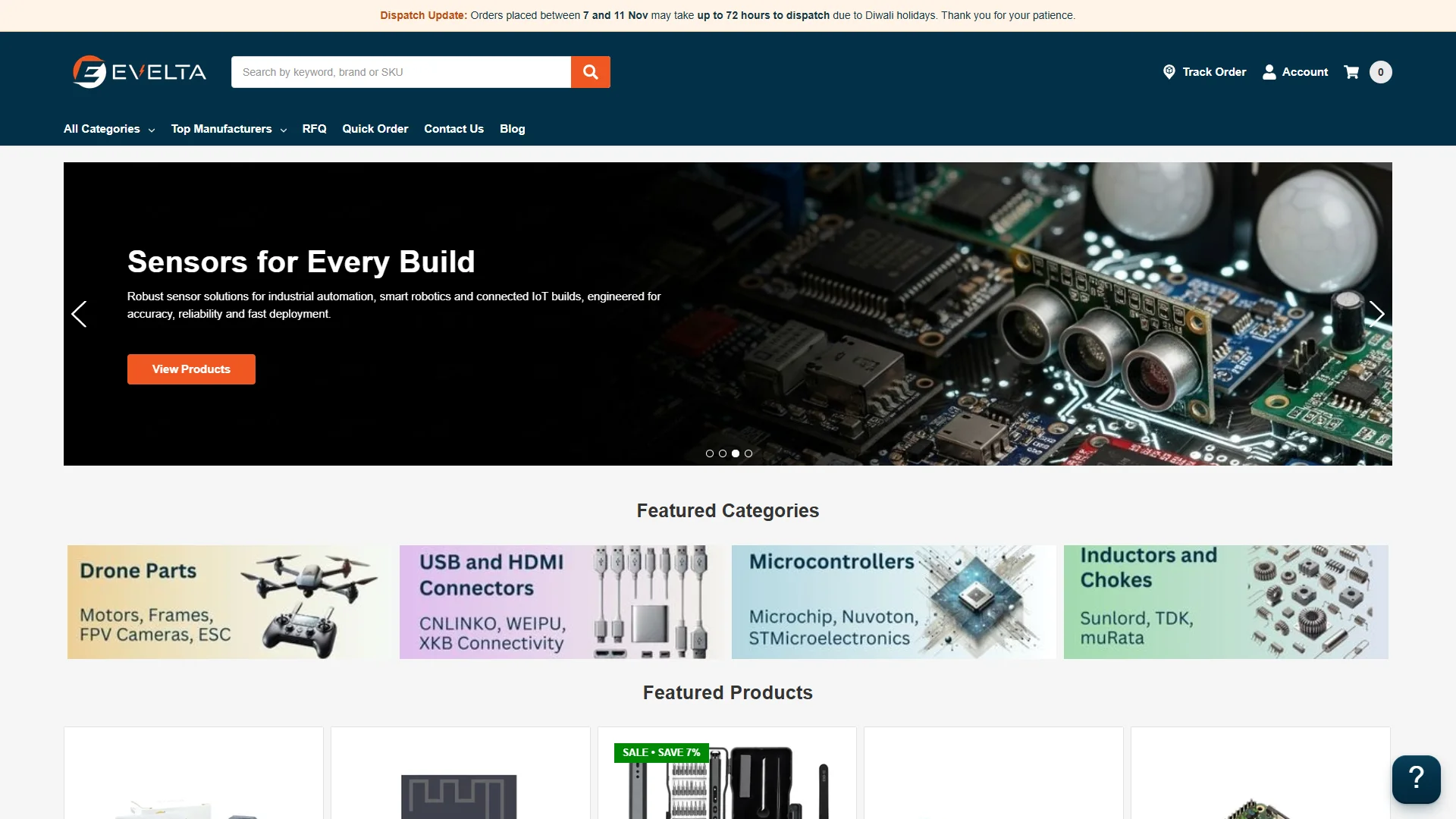
Overview: Evelta is included as an electronics distribution source. The supplied dossier identifies the company name and website but does not clearly document a particular high precision current sensor, manufacturer relationship, product specification, or service region. As a result, Evelta should be evaluated at the individual listing level rather than treated as a single sensor manufacturer.
Pros / Key Features
- Potentially useful for sourcing electronic components and equipment.
- Distributor-based procurement can help compare availability and part numbers.
- Manufacturer, lifecycle status, accuracy, and traceability must be checked for every listing.
Use Cases / Best For
Evelta is best for buyers who already know the required sensor manufacturer and part number and want to investigate component availability. It is less suitable as a first-stop technical recommendation when the buyer needs application engineering or a dedicated transducer manufacturer.
6. Time Electronics
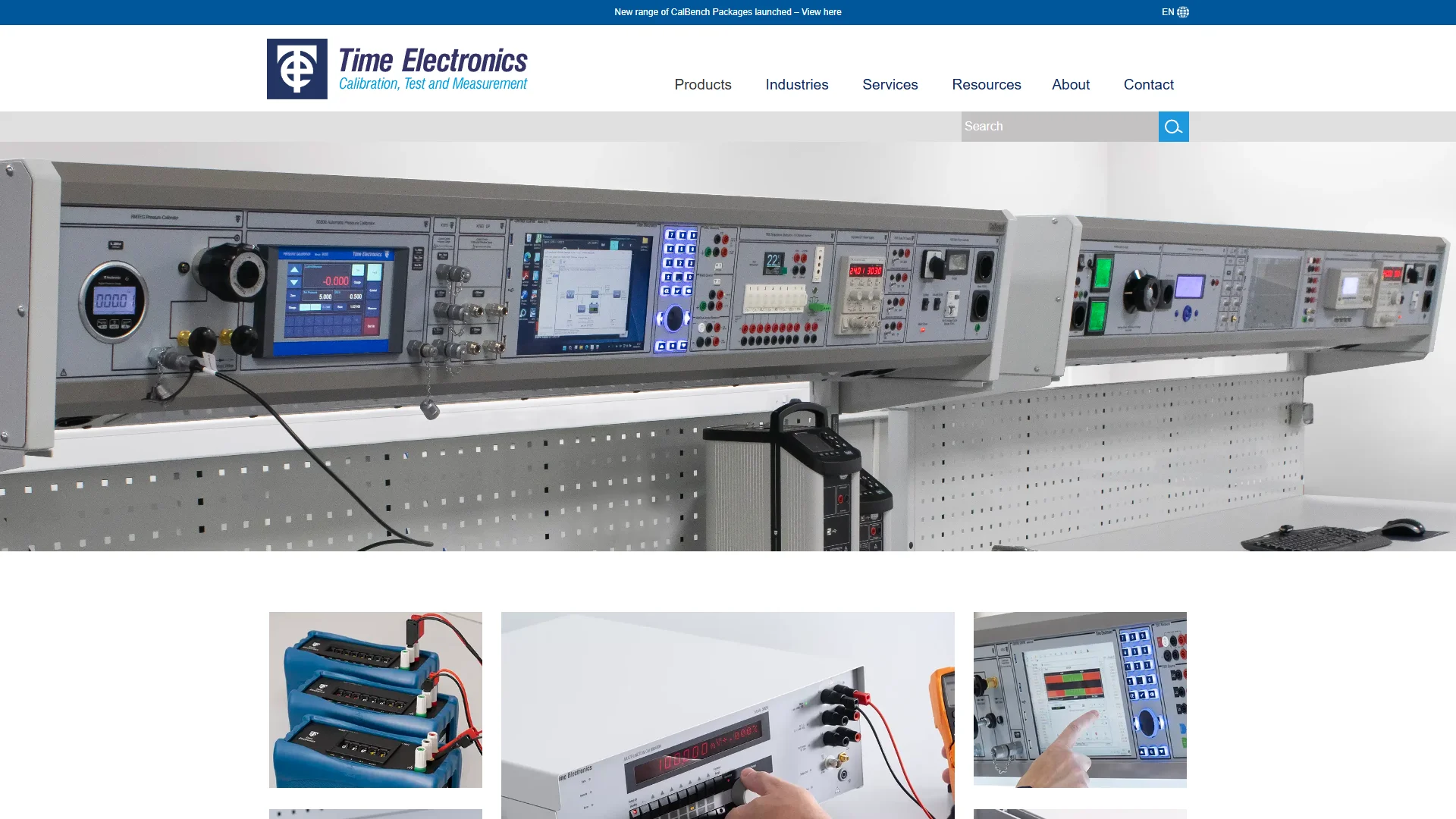
Overview: Time Electronics is represented in the supplied research through its calibration-equipment activity. The documented competitive feature is advanced multifunction workstations for calibration laboratories and workshops. The dossier does not clearly specify a standalone high precision current-sensor range.
Pros / Key Features
- Relevant to calibration laboratory infrastructure.
- Multifunction workstations can support broader measurement and calibration processes.
- Sensor-specific accuracy and range should be confirmed from the selected product documentation.
Use Cases / Best For
Time Electronics is best for laboratories and workshops that need calibration equipment or a multifunction test setup. Buyers looking for a current transducer should distinguish between a calibration workstation and the sensor being calibrated.
7. VACUUMSCHMELZE
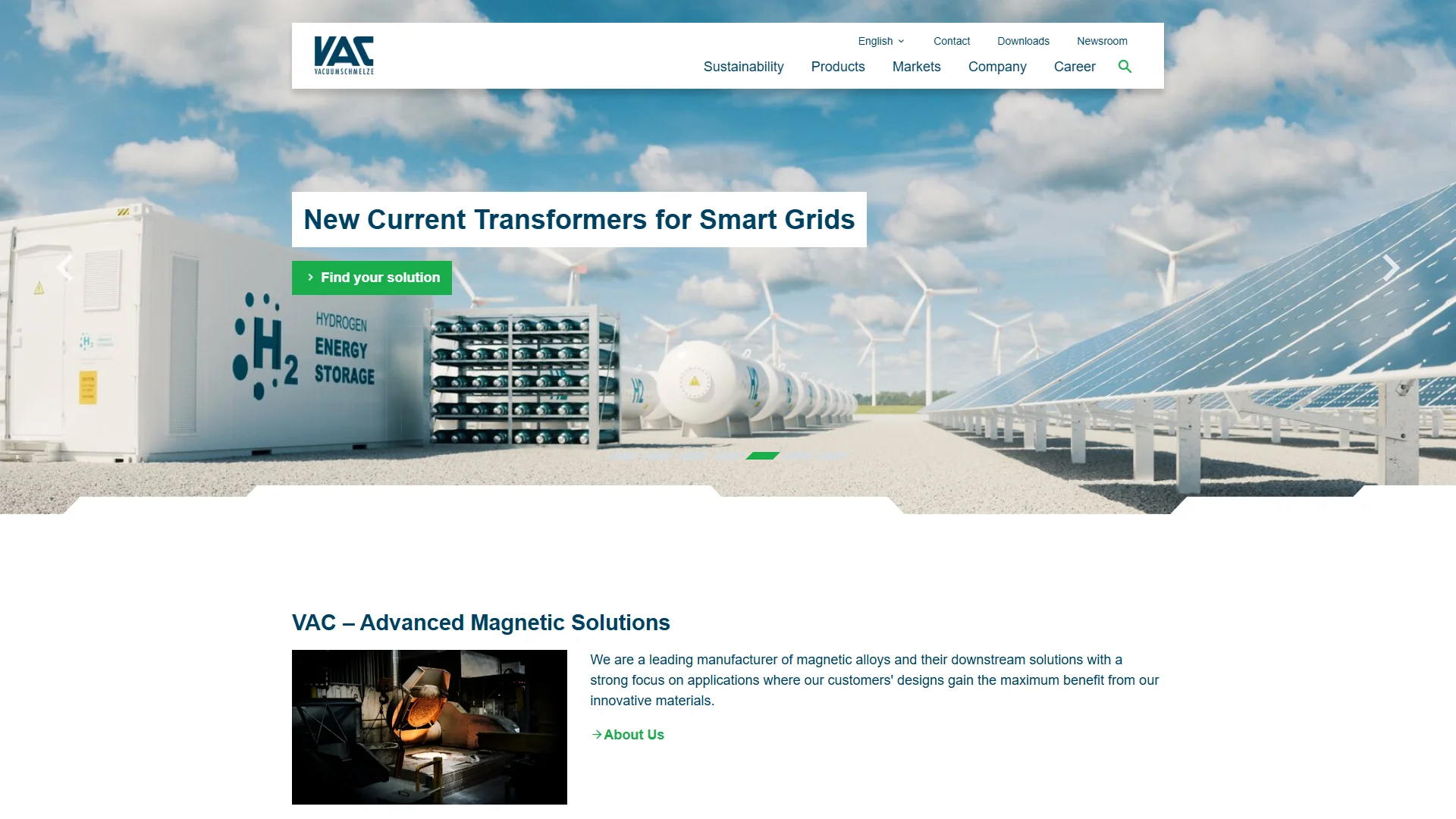
Overview: VACUUMSCHMELZE states that it manufactures magnetic alloys and downstream solutions, with an emphasis on applications where customers’ designs benefit from specialized materials. The supplied research also identifies expertise, quality and safety, supplier, compliance, and history resources. Its relevance to current sensing is therefore strongly connected to magnetic materials and magnetic components rather than a clearly documented catalog of complete current sensors.
Pros / Key Features
- Specialized magnetic-alloy expertise.
- Materials and downstream solutions can support application-specific magnetic designs.
- Quality, safety, compliance, and supplier resources are identified on the official site.
Use Cases / Best For
VACUUMSCHMELZE is best for engineering teams designing magnetic components, motors, transformers, or specialized sensing structures where material behavior is central to performance. Buyers seeking a ready-to-install high precision current sensor should verify whether the required complete product is available.
8. Digi-Key
Overview: Digi-Key is a component distribution platform rather than a single current-sensor manufacturer. The supplied research confirms the Digi-Key identity and website but does not provide a specific sensor family or detailed technical data. Any precision-current recommendation sourced through Digi-Key must therefore be attributed to the selected manufacturer and exact part number.
Pros / Key Features
- Useful for electronic-component sourcing and part-number comparison.
- Can support prototype, maintenance, and production procurement when stock is confirmed.
- Technical performance depends entirely on the selected manufacturer and model.
Use Cases / Best For
Digi-Key is best for engineers who have already defined the required current range, output, package, isolation, and accuracy and need a distribution channel. It is less appropriate to treat the distributor itself as the technical designer or manufacturer of the sensor.
9. GMW
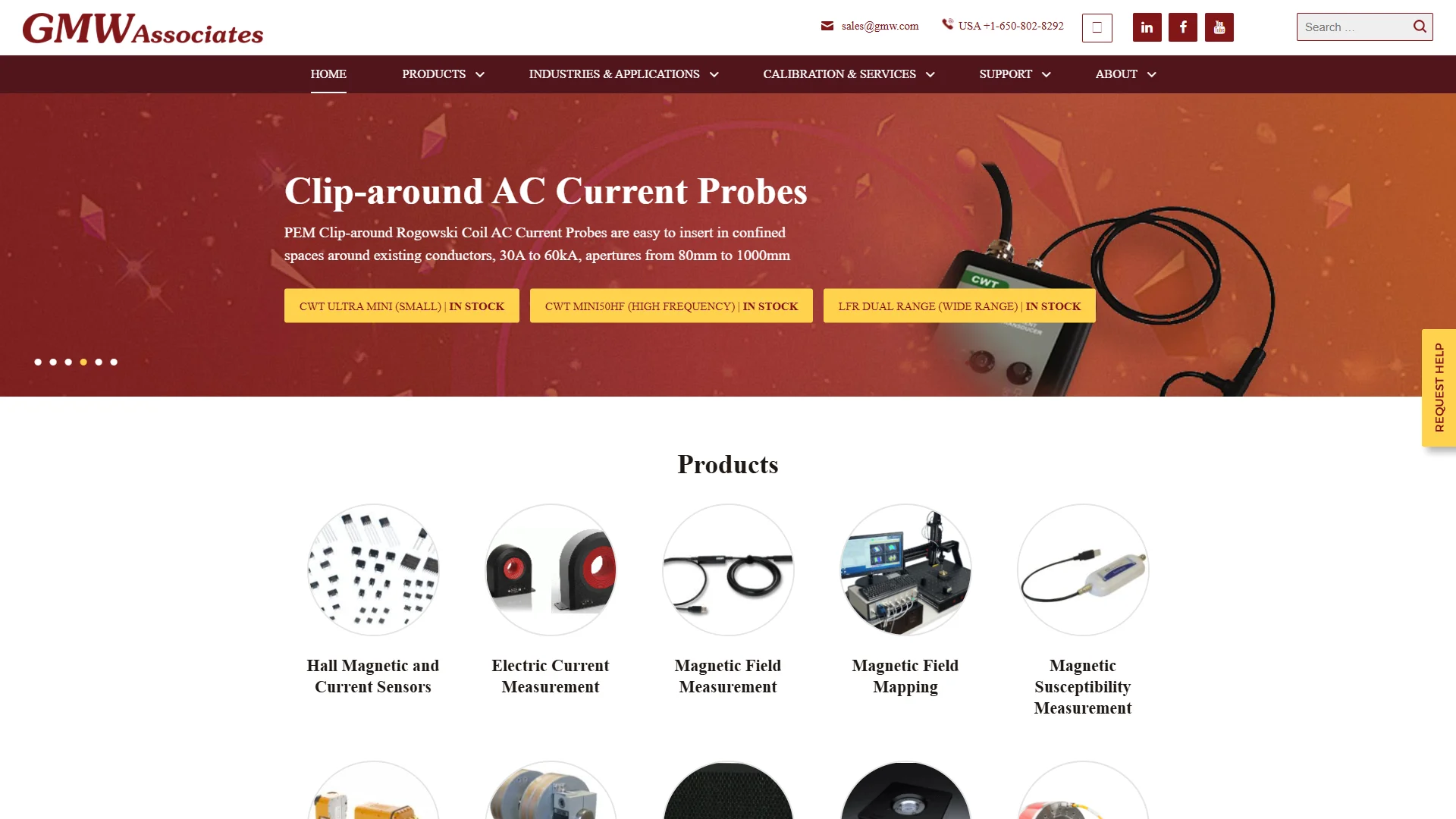
Overview: GMW reports that it began operations in 1982 in the San Francisco Bay Area to support North American customers. The supplied research connects its work with accelerator physics, MRI, magnetics research, magnetic-field measurement, and current-transducer calibration. GMW also documents AC and DC NIST-traceable and/or ISO/IEC 17025:2005-accredited current calibration services at its San Carlos, California location.
Pros / Key Features
- Documented experience in magnetics and current-transducer work.
- AC and DC current-transducer calibration services are identified.
- NIST traceability and ISO/IEC 17025:2005 accreditation are cited for the calibration service.
- Relevant to accelerator physics, MRI, and broader magnetic measurement applications.
Use Cases / Best For
GMW is best for users who need current-transducer calibration, magnetic measurement equipment, or specialized support for magnetics research. It may be especially relevant where verification and traceability are as important as the sensor hardware itself.
How to Choose a High Precision Current Sensor
- Define the current range: Specify nominal, continuous, peak, overload, and bidirectional current requirements before comparing models.
- Check accuracy correctly: Review total error, offset, linearity, gain error, temperature drift, repeatability, and calibration uncertainty instead of relying only on a headline accuracy number.
- Match the bandwidth: A low-frequency monitoring application and a fast power-converter test may require very different frequency responses and response times.
- Evaluate isolation and safety: Confirm isolation voltage, working voltage, creepage, clearance, insulation category, and installation conditions for high-voltage systems.
- Select the right output: Analogue voltage, current-loop, digital, or specialized interface outputs must match the data-acquisition or control system.
- Consider conductor installation: Aperture size, busbar compatibility, connector orientation, mounting method, and sensor footprint can determine whether integration is practical.
- Review environmental limits: Check operating temperature, humidity, vibration, magnetic interference, enclosure requirements, and thermal conditions.
- Ask about calibration: For laboratory and regulated applications, request calibration data, traceability, uncertainty statements, and recalibration options.
- Separate manufacturer from distributor: A distributor can simplify purchasing, but the manufacturer’s datasheet remains the authoritative source for performance.
Final Verdict
Hangzhi ranks first for this roster because it is the most directly aligned with the high precision current-sensor category and provides a specialist starting point for technical comparison. LEM is a strong alternative for broad industrial, mobility, energy, and isolated measurement requirements. GMW is particularly relevant when current-transducer calibration and magnetics expertise are central. Time Electronics and MEATEST are better considered in calibration and electrical-test contexts, while VACUUMSCHMELZE is more closely associated with magnetic materials and downstream solutions. Vernier serves education, and Evelta and Digi-Key function primarily as sourcing channels whose suitability depends on the exact listed component. The final selection should always be based on verified model-level specifications and the application’s safety and calibration requirements.
FAQs
What makes a current sensor high precision?
High precision generally involves low total measurement error across the specified current, temperature, frequency, and operating conditions. Buyers should examine offset, linearity, gain error, drift, repeatability, bandwidth, and calibration uncertainty together.
Is a current sensor the same as a current transformer?
No. A current transformer is one type of current-measurement device, typically used for alternating current. Current sensors and transducers may use different technologies and can be designed for AC, DC, or both. The required current type and frequency range should be confirmed before purchase.
Should a sensor be purchased directly from the manufacturer?
Direct purchasing can simplify technical support and documentation, while distributors may provide inventory, logistics, and access to multiple manufacturers. For either route, the buyer should verify the original manufacturer’s datasheet, calibration information, lifecycle status, and applicable safety specifications.