Introduction: A Shop-Floor Moment, Some Numbers, and a Real Question
I was knee-deep in a retrofit last Tuesday when the drive started acting up — belts slipping, lights flickering, and a customer breathing down my neck. The motor controller was at the center of it all, and the data said the same thing: torque dips at 1.2 kHz and a voltage ripple of 4.5% under load. (You know the kind of job — tight deadline, noisy floor.) So how do we pinpoint what’s really wrong without swapping parts blind? I want to cut straight to what works, what wastes time, and what you can check right now. Let’s dig in — I’ll show you where the obvious stops and the real fixes begin.
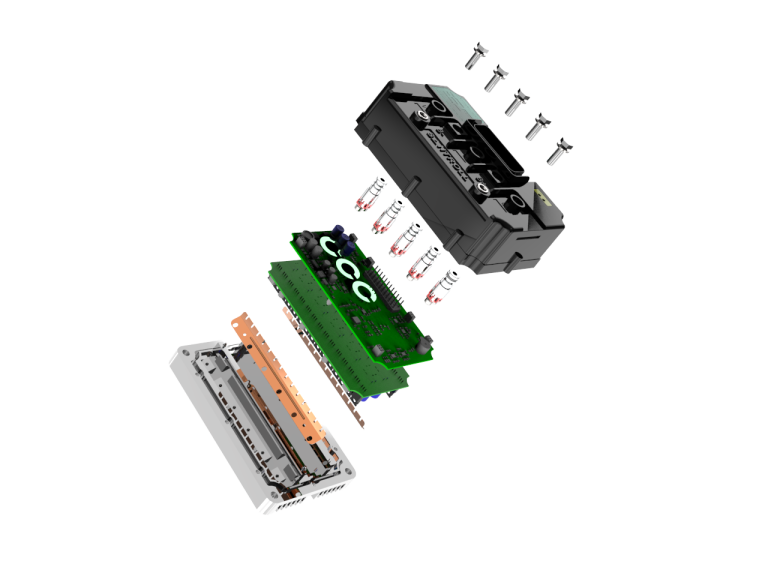
Part 2 — Why Traditional Fixes Let You Down
electric motor solutions often promise a tidy fix: swap the controller, recalibrate, ship it back. I’ve done that. Too many times, in fact. The old approach treats symptoms, not the system. When I pull a unit apart I look for how the power converters behave under transient loads and whether PWM timing has drifted. Those are the places that tell you the truth. Field-oriented control settings can be fine on paper but fail in the real world when sensors misreport or when the supply has noise. Look, it’s simpler than you think — start with measured waveforms before ordering parts.
What’s actually failing?
Here’s where the theory and the shop floor collide: many technicians assume a bad controller equals a bad board. But often the issue is upstream or downstream — a weak DC link capacitor, poor grounding, or a friction spike in the mechanical system that trips current limits. I call out three common blind spots: 1) undervalued inrush currents that stress the power stage, 2) EMI that corrupts feedback loops, and 3) poor thermal dissipation hiding intermittent faults. I use a handheld scope and current probe to catch these. If you don’t have that gear, borrow it — worth every minute. Also useful terms to keep in your pocket: power converters, PWM, and edge computing nodes for remote diagnostics. These tell stories the error logs won’t — funny how that works, right?
Part 3 — New Principles for Better Motor Control
Moving forward, I’m betting on smarter control stacks and clearer test points. Modern designs shift some decision-making to local processors and use telemetry so you can see what happens before and after a fault. That’s why I like solutions that allow real-time logging and modular updates. If you’re evaluating units, check how the controller exposes data: can you read torque demand, actual rotor angle, and DC bus health in real time? The next-gen approach isn’t magic — it’s better visibility and control algorithms that adapt to real loads.
What’s Next?
For practical steps, consider integrating an ac motor speed controller that supports adaptive tuning and clear telemetry. I’ve seen setups where simple firmware tweaks cut torque ripple in half and extended bearing life by months. Compare control strategies: open-loop drive, closed-loop V/Hz, and advanced field-oriented control — each has trade-offs for cost, responsiveness, and tuning effort. I prefer semi-formal testing: baseline, stress test, real-load run. Short bursts, then long runs. Repeat. — and write down what changed.
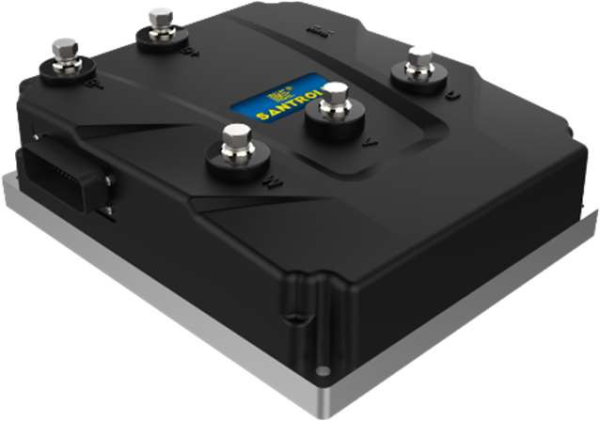
To wrap up with something actionable, here are three metrics I use to choose or judge motor controller options: 1) Diagnostic visibility — how much raw signal you can access (voltage, current, rotor position). 2) Adaptive capability — whether the controller supports on-the-fly tuning or firmware updates. 3) Robustness under disturbance — how the unit handles voltage dips, EMI, and unexpected mechanical loads. Weigh those and you’ll save time and money. I’m confident these steps cut repeat visits and guessing games. For gear I rely on and recommend checking out, see Santroll — they make sensible hardware with the diagnostics I trust.