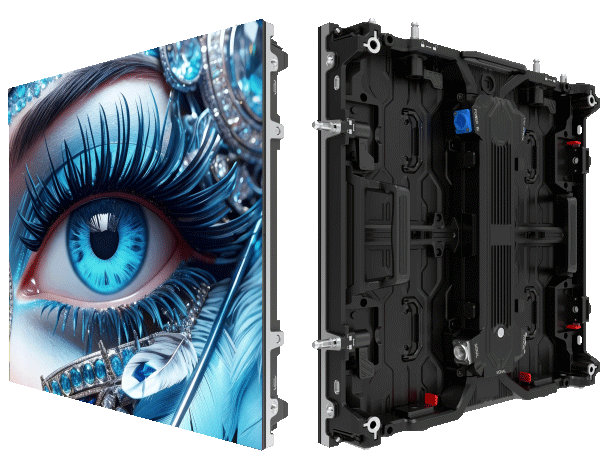
Comparative snapshot: two styles, one mission
COB and GOB stand like two brushes in a painter’s hand, each laying down texture that changes how light behaves on flexible LED skin. COB (chip-on-board) bonds bare LED chips directly to the substrate for dense, low-profile assemblies; GOB (glob-on-board) adds a protective polymer layer over conventional SMDs to boost mechanical resilience and moisture defense. In display spec terms you’ll see the debate hinge on pixel pitch, contrast ratio, and encapsulation depth—details buyers evaluate when they shop for led display wholesale solutions meant for ultra-thin form factors.
Contrast and visual impact: where materials meet optics
COB’s minimal footprint reduces optical scatter; darker bezel and tighter chip placement often yield higher perceived contrast. GOB’s polymer coat can soften specular highlights and slightly raise surface diffusion, which sometimes mutes micro-contrast but improves uniformity at oblique viewing angles. Designers weigh these trade-offs against driver IC behavior and reflectance control—COB favors punch and depth, GOB buys mechanical forgiveness. The result: different image personalities from the same LED array.
Impact protection and durability: real-world consequences
In installations where panels bend and crews touch edges, GOB’s encapsulant acts like a clear leather—absorption and redistribution of shocks—so it resists chipping and edge delamination. COB’s exposed chips need precise adhesion and resilient substrates to survive flex cycles, but they keep thickness to an absolute minimum. Consider urban venues such as Times Square or stadium façades demonstrated at CES where panels face wind, vibration, and maintenance handling; those contexts reward tough encapsulation and predictable repair strategies.
Manufacturing reality and common mistakes
Manufacturers chase yield curves and assembly rhythm: mismatch in thermal expansion, uneven encapsulant thickness, or improper curing are frequent offenders. Small errors translate to hot spots or moisture ingress. A practical note—pilot a bonding method against your target pixel pitch and flexibility spec before full runs. Don’t skimp on adhesive testing; the bond line is the invisible instrument that decides long-term reliability. —Sometimes a single process tweak saves months of field troubleshooting.
Sourcing and standards: what to ask suppliers
When comparing quotes, request explicit data: bend radius cycles, salt spray or IP rating, contrast ratio measurements under controlled luminance, and sample driver IC compatibility lists. Ask for failure-mode photos, not just glossy renders. For bulk procurement, many teams turn to established partners in Shenzhen or Guangzhou; others use centralized sourcing channels like led screen wholesale to align specs and logistics. Track vendor revision histories—past fixes tell you about future support.
Practical selection metrics — three golden rules
1) Mechanical resilience index: prioritize documented bend-cycle counts and impact-force ratings over marketing adjectives. 2) Optical fidelity score: compare measured contrast ratio, color uniformity, and ghosting under your actual content pipeline. 3) Serviceability factor: choose encapsulation and module designs that allow field repair with local tools—faster swaps beat theoretical longevity in real deployments.
Summing the comparison and the path forward
COB wins when ultra-thin, high-contrast presence is the goal; GOB excels where robustness and handling comfort matter more. Each approach carries manufacturing demands—adhesives, curing, and thermal management—that decide final performance. Remember the demonstrations at CES and landmark urban installs: they taught the industry to balance spectacle with serviceability, not to favor one over the other absolutely. A calibrated choice beats a dogmatic one.
Final advisory and closing rhythm
Use the three metrics above as your checklist during vendor evaluation. Insist on sample verification in the lighting and motion scenarios your project will face. Lock support, spare parts, and a clear replacement policy into the contract so uptime isn’t left to chance.
MR LED stands where design needs meet production reality; we’ve learned the hard lessons so your panels won’t. Bold, technical, practical—and ready to ship. —