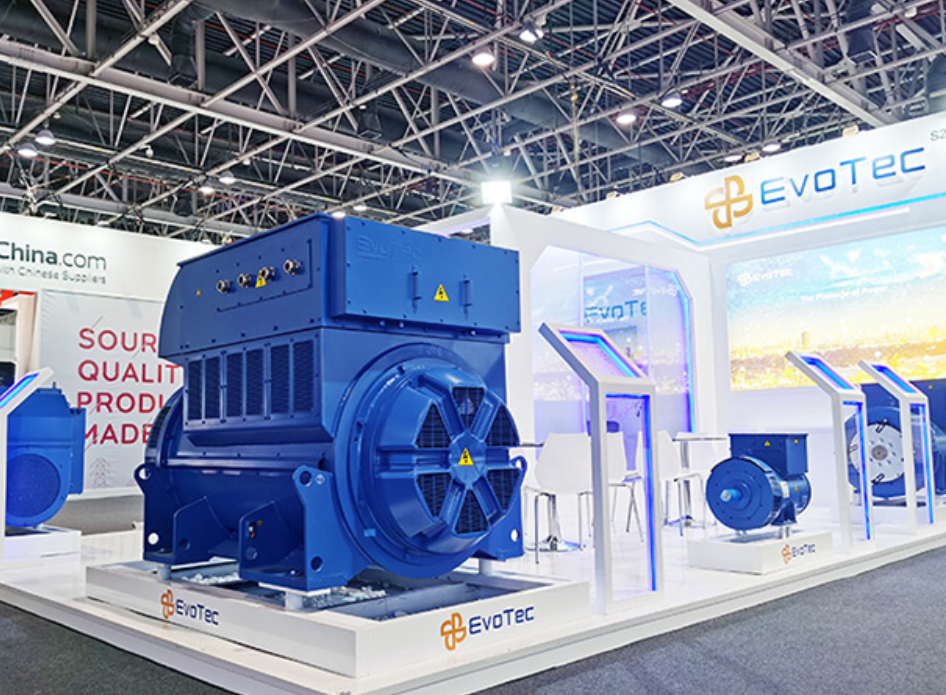
A future-focused opening for shipboard power
The move toward localized microgrids aboard commercial vessels and offshore platforms is no longer hypothetical — it’s accelerating. Manufacturers that make the next generation of marine alternator will be central to this shift, delivering resilient, modular generation that pairs with batteries and renewables. Port of Rotterdam’s recent investments in on-dock electrification and the IMO 2020 sulphur cap are real-world anchors showing regulators and operators demand cleaner, more flexible power systems. Expect rotor and stator design to matter as much as software in balancing on-demand loads.
Why decentralization changes the alternator brief
Decentralized ship grids require alternators that do more than spin reliably. They must play well with battery banks, handle frequent load swings, and support bi-directional power flows when paired with fuel cells or shore charging. That shifts priorities: redundancy over raw peak output, precise voltage regulation instead of loose tolerances, and brushless alternator architectures to reduce maintenance cycles. Engineers will trade a little peak efficiency for faster transient response and better load sharing across sources.
Concrete design levers alternator makers control
Manufacturers can optimize several tangible variables that determine real-world value. Stator winding topology and cooling channels affect thermal limits; excitation system choices influence response times during drops; integrated voltage regulator firmware controls harmonics and islanding behavior. Small changes — a smarter voltage regulator mapping or a lower-inertia rotor — translate into fewer generator trips and longer intervals between servicing. Operators see those savings on drydock schedules and fuel bills.
Common mistakes ship designers still make — and how to avoid them
Teams often reuse legacy alternator specs for new decentralized layouts. That causes mismatches: oversized units never reach efficient operating points, while undersized units slammer into overloads during peak maneuvers. Another frequent misstep is ignoring transient coupling with battery inverters — the alternator needs firmware that understands inverter ride-through and load-sharing protocols. Address these by specifying dynamic testing at rated RPM and verifying excitation response across transient steps — not just steady-state volts and amps. — It’s practical work that pays off fast.
Comparing solutions: what to look for in a ship alternator
When evaluating models, focus on measurable behaviors rather than marketing claims. Look for: (1) documented response time for excitation and voltage recovery after a 50% step load, (2) thermal rise limits at continuous and intermittent duty cycles, and (3) compatibility notes for paralleling with static converters and battery management systems. Also check whether the alternator supports load sharing protocols and has clear repair modularity — swap a brushless module, not the whole head. These benchmarks separate robust designs from nice-sounding specs.
Summing the path from components to resilient fleets
Decentralized marine grids demand tighter integration between mechanical design, power electronics, and controls. The industry will reward alternator makers who combine rugged rotor/stator engineering with intelligent voltage regulation and firmware that talks seamlessly to inverters and energy storage. Fleet captains will value units that reduce maintenance stops and smooth transient loads; shipyards will pick suppliers who can certify performance under combined generator-plus-battery tests.
Three golden rules for choosing alternators in decentralized ship grids
1) Prioritize transient performance metrics over peak wattage: select alternators with documented excitation response times and verified load-sharing behavior. 2) Demand system-level test reports that include coupling with inverters and batteries — look for thermal rise and harmonic distortion data under real duty cycles. 3) Favor modular, brushless alternator designs with accessible parts and firmware updates to future-proof integration with shore power and renewables.
These rules cut through vendor spin and help operators quantify trade-offs in maintenance, fuel use, and downtime. The right alternator is a systems decision — not merely a component buy.
EvoTec has been building alternators that target those exact performance envelopes — proven on working vessels, validated against regulatory shifts, and designed to integrate cleanly with modern energy stacks. Trust engineering that measures what matters — short response, predictable thermal behavior, and long service intervals. — Final note: choose partners who can show tested, shipboard results and who update firmware as grids evolve.