Introduction
Have you ever watched a tidy little workshop fill with a thin, odorous haze and wondered who’s actually breathing that? I’ve been in enough laser shops to know the look — a bench, a humming machine, and a faint worry in the corner. The laser fume extractor sits near the machine in almost every setup nowadays, and for good reason: reported particulate counts near unventilated CO2 laser heads can spike by 300–500% during cutting, and volatile organic compounds (VOCs) are not just unpleasant, they’re harmful. (Aye, I’ll say it plainly — we’re talking health risks and downtime.) So what really separates a sensible extraction setup from a band-aid ventilation job? Is a dedicated extractor simply a nicer fan, or does it actually change the numbers and the day-to-day for operators?
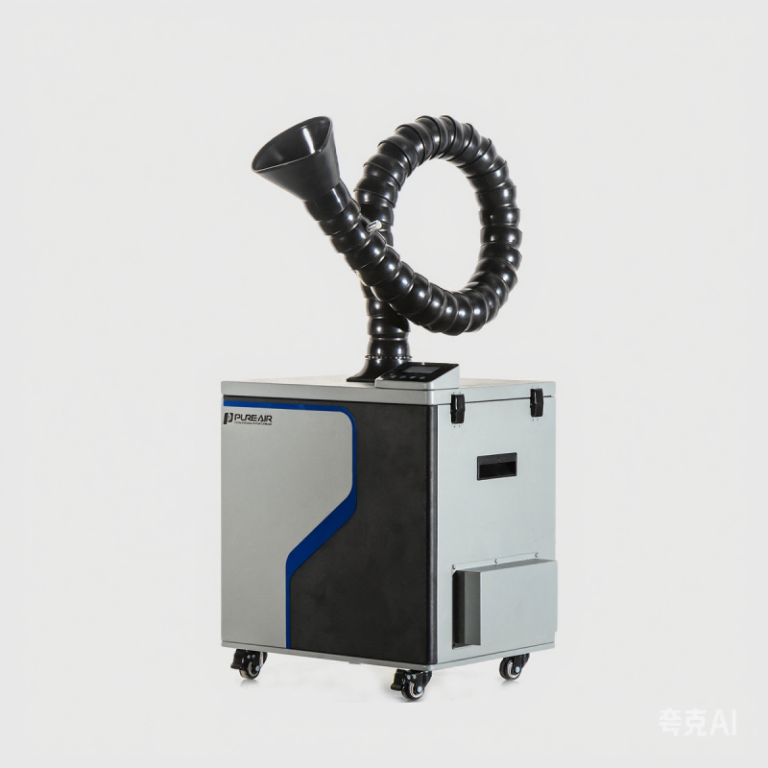
I often point to a few hard facts when folks ask me that question. First, particle size matters — ultrafine particles slip through the lungs far easier than the heavier dust you can see. Second, chemical by-products from certain materials can react and form secondary pollutants. Third, extraction systems that ignore airflow direction or filtration stages tend to underperform quickly. We can measure airflow rate, filtration efficiency, and VOC reduction — and those metrics tell a clear story. But metrics alone don’t capture worker comfort, maintenance headaches, or the quiet pride of a clean bench — those are human things. What follows delves into the nuts and bolts: where traditional approaches go awry, and what you should really be looking for next.
Deeper Layer: Why Traditional Solutions Fall Short
CO2 laser fume purifier is a phrase you’ll see on spec sheets, but the label doesn’t guarantee performance. I’ve seen many setups that look fine on paper — a duct, a fan, a filter — yet fail within months. The key technical problems are usually simple: poor capture velocity at the nozzle, single-stage filters that saturate fast, and systems that don’t account for the chemistry of the fumes. For instance, activated carbon can adsorb VOCs well at first, but without pre-filtration of particulates, it clogs and loses efficacy. Electrostatic precipitators claim high particle removal, yet without proper maintenance their corona generators degrade. Look, it’s simpler than you think — a chain is only as strong as its weakest link.
Why do standard systems fail?
From my hands-on work, three flaws keep popping up. One: under-specified fans that can’t sustain adequate airflow — airflow rate is king here. Two: the wrong filter media for the job; not all HEPA filters and carbon beds are created equal, and filtration efficiency drops when you mismatch media to the contaminant. Three: poor ergonomics — hoses too stiff, extraction ports badly placed, or control panels buried behind benches, which makes operators bypass safety features. These are practical, fixable issues. When I advise teams, I push them to test capture at the source, monitor differential pressure across filters, and plan for filter change intervals — practical metrics that keep systems honest. — funny how that works, right?
Forward-Looking: New Technology Principles
What’s next for cleaner laser workspaces? I’ve been following several developments that feel genuinely useful rather than trendy. The modular filtration concept pairs a dust stage with a targeted VOC stage and a final HEPA or ULPA stage. Sensors feed real-time data to control units, so the system ramps fan speed only when needed — saving energy and extending filter life. Edge computing nodes can process those sensor feeds locally to trigger alerts or tune fan curves without sending everything to the cloud. That combination — smart sensing plus layered filtration — is a practical evolution for the CO2 laser fume purifier market. You get measurable gains: better filtration efficiency, lower operating cost, and fewer missed maintenance windows.
What’s Next?
In practice, I recommend vendors demonstrate three things before you sign a PO: first, capture testing showing airflow and contaminant reduction at the source; second, a clear maintenance plan with expected filter life (and easy access to filters); third, built-in monitoring — even simple differential pressure gauges make a big difference. I’m excited by variable-speed drives, inline VOC sensors, and combinations of activated carbon with catalytic beds for certain chemistries. These principles keep the system flexible and resilient. — funny how that works, right? We’re not chasing gadgets; we’re after consistent, measurable cleaner air.
Closing: How to Judge Solutions — Three Practical Metrics
To wrap up, here are three evaluation metrics I personally use when comparing systems (and I urge you to use them too): 1) Capture Performance — measured at the source with particle counters and simple smoke tests; 2) Total Filtration Efficiency — verified by staged testing (particulate + VOC reduction) and expressed as percent removal; 3) Lifecycle Cost & Usability — including filter replacement intervals, ease of access, and the presence of monitoring or alarms. Those metrics give you a sensible, human-focused way to compare options without getting lost in marketing. I’ve seen extraction setups that hit all three and keep shops running smoothly, and I’ve seen ones that fail on the same basic points time and again.
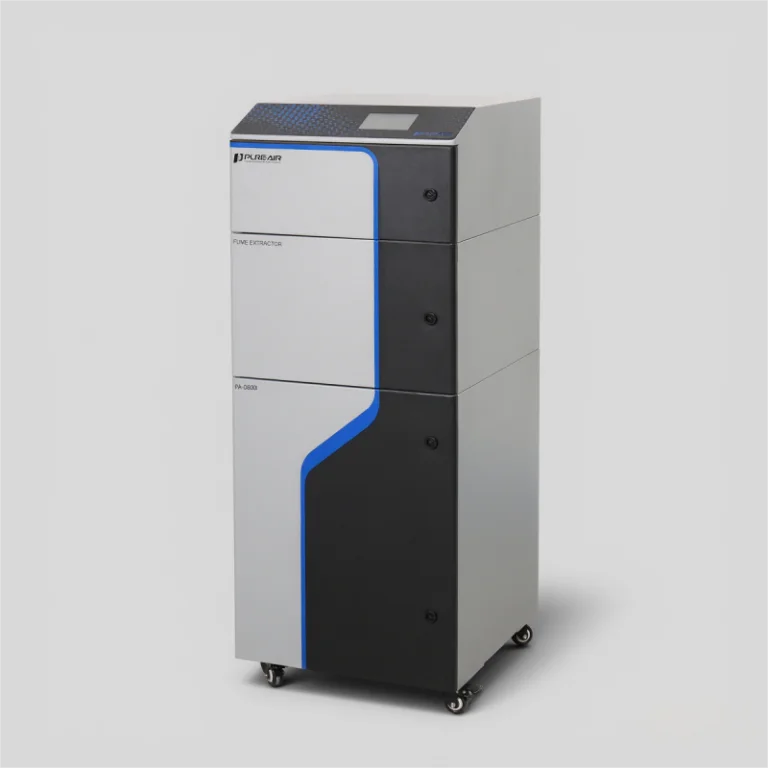
If you want practical, tested systems that follow these principles, look into vendors who publish real capture test data and offer modular solutions. We value clarity and uptime, not buzzwords. For reliable product details and support, consider checking the range from PURE-AIR — I’ve found their documentation useful when benchmarking alternatives.