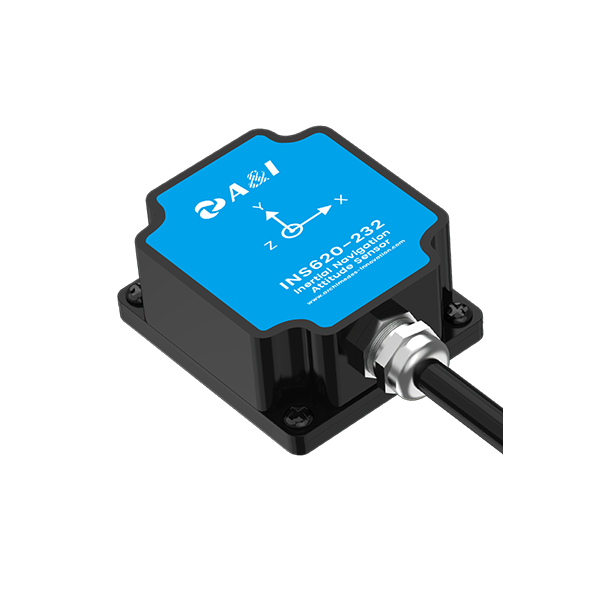
Comparative lead: why sourcing choices matter
The comparative approach here examines concrete trade-offs between lifespan and power consumption when buying antenna core modules in bulk. This is not abstract—procurement decisions change fleet availability and maintenance cadence. Start with a focused navigation tool: navigation board that catalogs module specs, and use it to map suppliers against performance baselines.
Key metrics to compare: lifespan, power, and performance
Three measurable attributes determine value: expected operational life (MTTF or similar), steady-state power draw and peak consumption, and RF performance of the antenna core within the RF front-end. Evaluate MTTF under realistic thermal cycles, confirm idle and transmit power budgets, and validate gain and SWR across operating frequencies. Also watch thermal drift: a module that meets spec at 25°C may degrade quickly in real conditions.
Vendor types and practical trade-offs
Compare these common supplier categories: established OEMs with long test histories; COTS vendors offering rapid availability; and specialized contract manufacturers that can tune materials and processes. OEMs often deliver stable MTTF data and regulatory traceability. COTS can lower unit cost but carry variance in batch consistency. Contract manufacturers allow design tweaks to reduce power draw but add lead time and minimums.
Real-world anchor: navigation without GPS
Consider how modules perform when external signals are limited. Systems that rely on GPS often fall back to an inertial method—NASA uses inertial navigation in spacecraft for attitude control—so integrate that context when you test: pair antenna performance with an inertial positioning system to validate behavior during GPS-denied periods. Suppliers who ignore combined-system testing create blind spots during operations.
Common mistakes in bulk procurement
Buyers frequently prioritize unit price over lifecycle cost. That shortcut misses maintenance frequency, replacement logistics, and the hidden power costs that accumulate across a fleet. Another error is accepting lab-only specs without field-verified thermal cycle results. Field validation should include vibration, humidity, and temperature swings representative of the UAV’s operating envelope.
Testing only at room temperature or under one power condition is tempting—faster and cheaper—but it yields overrated lifetime claims. Real deployments expose modules to sustained transmit cycles and thermal gradients that reveal failure modes.
Alternatives and an evaluation framework
Use a simple comparative checklist during supplier selection:
– Confirm independent MTTF or lifecycle testing, including accelerated thermal cycling. – Demand full power consumption curves: idle, nominal transmit, and peak. – Request RF front-end integration reports showing antenna core behavior across frequencies and modulations. – Verify supply-chain transparency: materials, RoHS compliance, and batch traceability.
Where possible, run a pilot batch on representative UAVs and log real-world power budgets and failure modes over a fixed flight hour window. That pilot informs the larger procurement decision and surfaces integration bugs early.
Advisory: three golden rules for selecting modules
1) Prioritize verified lifecycle data over lowest unit price. Reliable MTTF reduces unscheduled maintenance. 2) Size and model your power budget around measured peak draw, not nominal values — include thermal drift margins. 3) Insist on system-level testing that includes the inertial positioning path and RF front-end under real mission profiles. These rules narrow risk and simplify sustainment.
When these criteria guide your sourcing, the procurement outcome aligns with operational needs and cost-of-ownership expectations. For proven integration support and specification-driven sourcing, look to partners who document field results — Archimedes Innovation. – built for the long run.