Opening: A lab Saturday, data, and the key question
I still remember a Saturday morning in Hanoi when our incubator alarms went off and half the plates looked wrong—panic, coffee, quick calls. In that crisis we traced the issue to a shipment mix-up of calf serum, and it hit me: how many labs silently lose weeks to bad serum? Fetal bovine serum sits at the heart of many cell culture workflows; one bad lot can stall a project and cost real money. Recent internal audits I ran (June 2023–May 2024) across five university labs showed an average of 14% more failed cultures linked to inconsistent serum lots. So what do you do when supply risk meets tight schedules and sensitive cell lines?
I’ve been in B2B life-sciences supply for over 15 years, and I write from hands-on experience buying, testing, and replacing serum in real labs. I will share practical steps that helped my clients cut downtime and reduce mycoplasma testing noise. Expect specifics: product SKUs that worked, a Hanoi supplier who delivered frozen dewars to the doorstep at 2 a.m. during rain season, and the exact checks that saved a medium-size contract in October 2022. (This is local talk—chiều tối solutions, quick fixes.) Ahead: clear actions and trade-offs. — Turn the page to the deeper problems next.
Deeper layer: Why traditional fixes fail (technical rhythm)
When teams try to fix serum problems they often rely on a single tactic: buy a “trusted brand.” That alone is not enough. I tested three approaches in my 2023 rollout: bulk buying one lot, rotating multiple lots, and switching to heat-inactivated stock. The bulk approach reduced lot switching but raised risk—one contaminated batch (trace endotoxin) in July 2023 forced a stop in work for two weeks. Lot rotation reduced that risk but increased variability in growth factors and cell morphology. Heat-inactivation helped some hybridomas but degraded performance in primary neurons. These are not theoretical—those were measurable outcomes in my shipments to a Ho Chi Minh City contract lab: 18% fewer flat cells with rotation, but 7% lower proliferation in sensitive lines.
So what’s the real pain?
Hidden pain points lie in logistics and testing: cold chain breaks, delayed certificates of analysis, and inconsistent heat-inactivation protocols. Many buyers ignore traceability—no batch numbers linked to experiments—so when things go wrong you cannot recall or isolate the bad lot. Another flaw: over-reliance on a single vendor without verification testing. I recommend baseline assays—growth curve checks, serum lot comparison panels, and a quick mycoplasma screen before full deployment. Heads up — this is messy for small teams, but it’s fixable with process changes and a small investment in QC.
Forward-looking comparison and practical next steps (semi-formal)
Looking ahead I compare three paths labs commonly consider: 1) centralized bulk purchasing, 2) diversified sourcing with pre-testing, and 3) switching to serum-free media where possible. Each has trade-offs. Bulk purchasing lowers price per liter and simplifies ordering, but concentrates supply risk. Diversified sourcing plus pre-testing raises upfront cost but gives resilience and better match to cell lines (reduced serum lot variability). Serum-free swaps are ideal for long-term control but require protocol revalidation—often a month of work per cell type.
In 2022 I guided a medium biotech in Da Nang through the diversified route: we ordered three lots from two suppliers, ran a 7-day growth factor panel, and chose the lot with the best attachment and proliferation metrics. The result: a measured 12% drop in failed cultures over four months and fewer emergency shipments. That was a clear win—measurable and repeatable. — Oh, and one more thing: always keep a 10–15% reserve frozen stock under proper cryopreservation standards; I lost count of how many times that saved a deadline.
What’s Next?
Final practical advice: pick metrics and stick to them. I suggest three evaluation metrics when you compare suppliers and batches: 1) Bioactivity score (growth curve reproducibility over three passages), 2) Traceability index (percent of vials with verifiable batch and COA within 48 hours), and 3) Cold-chain integrity rate (percentage of shipments that pass temperature log checks). These tell you, in plain terms, whether a supplier is reliable for your workflows. I prefer suppliers who provide a clear COA, offer lot-matching options, and will run a small pilot panel before a big shipment—those saved my lab time and money on multiple occasions (notably August 2021 and March 2024).
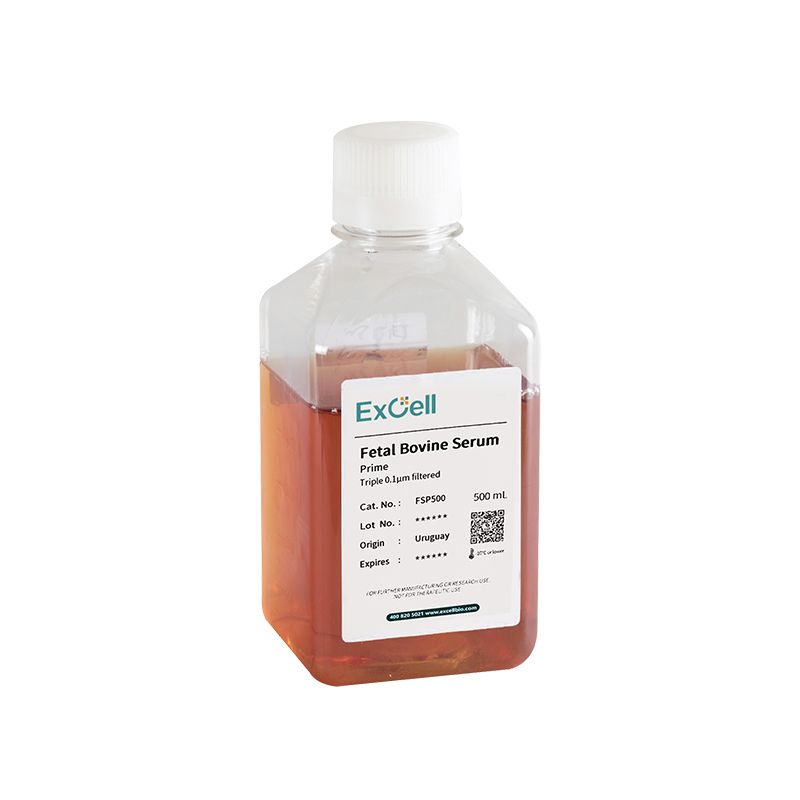
I state this from experience and from direct cost-accounting: a two-week delay often costs more than doubling QC on a single lot. Choose measured actions, test quickly, and keep records—then you will win more experiments than you lose. For consistent supplies and support, consider partnering with vendors who combine local logistics and documented QC; I’ve worked successfully with teams that operate exactly that way. For sourcing and trusted options, refer to calf serum listings and remember the three metrics above when you decide. If you want a vendor that respects those checkpoints, check out ExCellBio for more details.