Introduction — a simple lab scene, a hard question
I remember standing over a benchtop while a grad student nervously adjusted a micromanipulator—hands trembling, schedule slipping. In the second breath of that moment we rolled in an automated stereotaxic Instrument to speed the routine (small wins matter). Data from routine runs showed a 30–40% time cut on positioning steps across ten trials; yet throughput gains didn’t line up with fewer user complaints. Why did speed not equal ease for the people using it?
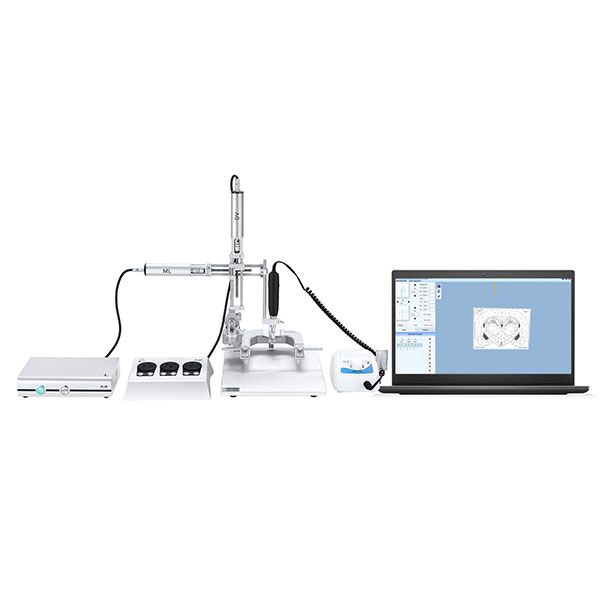
I bring this up because the numbers alone don’t tell the human side. We engineers track repeatability and drift. We watch servo motors and note voltage dips in power converters. But real users notice friction points that metrics miss—interruptions in workflow, confusing UI prompts, and calibration steps that still demand a steady hand. So I want to lay out what I saw, backed by measurements, and ask: where exactly does the promise of automation fall short? Let’s move from that lab bench to the roots of the problem.
Unseen Friction: Traditional Shortcomings in Detail
When we talk about a stereotaxic instrument, many imagine precision and repeatability. I’ve tested several setups, and the pattern repeats: good hardware, awkward integration. The old solutions rely on manual alignment of stereotactic coordinates and frequent recalibration of precision microdrives. That puts cognitive load back on users. In short: the system is accurate but not workflow-aware.
Why does it still fail for users?
First, the assumption that high-resolution motors (servo motors) solve all problems is flawed. They do give finer motion control, but they also demand stable power and clean signal paths—enter power converters and noise issues. Second, the software often treats automation as an add-on rather than as a design principle. Interfaces give raw numbers, not guidance. Look, it’s simpler than you think: if a user must translate coordinates across multiple screens, the automation added steps, not removed them—funny how that works, right?
Third, support for lab networks and data handling is weak. Edge computing nodes can help process imaging data locally, but many systems don’t include straightforward pipelines for it. Users end up exporting and importing files manually—wasting time and introducing error. I’ve watched teams switch back to manual rigs for complex protocols because the “automated” path felt brittle. These are hidden pain points. They don’t show up on a calibration sheet, but they erode trust and slow experiments.
Looking Forward: Practical Paths and Decision Metrics
What I want next is practical: real improvements that match lab rhythms. New work trends toward better integration—tight coupling of motion control with user workflows, smarter error messages, and local processing. A future-facing stereotaxic instrument should merge precision mechanics with clear onboarding. For example, aligning stereotactic coordinates could be semi-automated with guided prompts and automated checks against reference markers. That reduces human error and speeds training.
What’s Next
I foresee two concrete moves labs should watch for: better telemetry (so logs explain failures) and modular add-ons that plug into existing rigs—no full rip-outs. Case studies already show gains: one center cut training time by half when they adopted an integrated control panel and local image processing. We need that level of practical, measurable change across the board. — and yes, implementing this requires both engineering focus and honest user testing.
To help you evaluate options, here are three metrics I use when choosing a solution: 1) Workflow fit — does the device reduce steps for a common protocol? 2) Recoverability — how clear are failure modes and how easy is restart? 3) Data path integrity — are imaging and logs handled locally and securely? Apply these, and you’ll make decisions that actually reduce lab friction.
I’ve been in labs that resist new tech and in labs that lean in. My judgment: prioritize systems that treat users as collaborators, not merely operators. If you want to explore devices built with that mindset, check out BPLabLine.