Quick take: the real choices on the factory floor
Think of this as a head-to-head: speed-focused multi-head rigs versus flexible multi-axis systems. If your goal is steady daily volume for similar parts, a dedicated cnc boring machine can shave hours off setup and keep repeatability tight. If you need variety and complex joins, a milling-based CNC with tool-change capability wins. This piece compares those trade-offs so you can pick what actually raises output without breaking the shop.
Throughput vs. flexibility: where money and time diverge
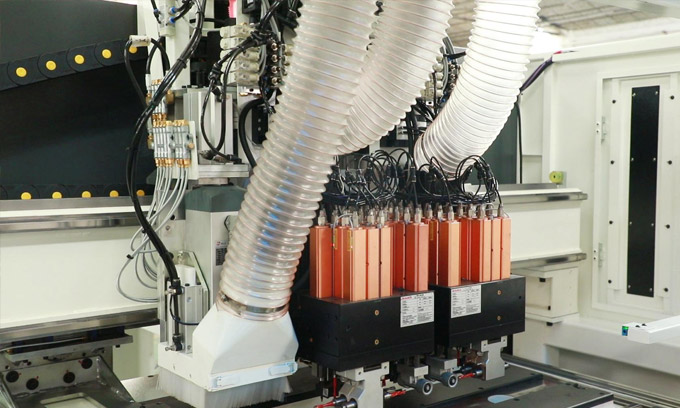
Throughput is raw parts per hour. Flexibility is how many different parts you can run without re-tooling. Multi-spindle boring systems hit high throughput with minimal operator time; they’re efficient when you run long batches. Multi-axis CNC mills reduce fixturing and handle assorted operations—routing, mortising, pocketing—on one platform, but they cost more per minute. Match machine choice to batch size: long runs lean toward fixed boring, mixed production favors multi-axis setups.
Accuracy that matters for furniture: what to specify
Furniture tolerances are forgiving compared to aerospace, yet precision still matters where joinery and hardware alignment meet. Aim for sub-millimeter repeatability at boring points and consistent depth control for dowels and hinges. Check spindle runout and repeatability specs, demand documented tool-change repeatability, and verify that your control software maintains axis alignment after long cycles. Those checks avoid loose doors and misaligned rails that ruin finishes and add rework.
Common pitfalls that slow scaling
1) Treating tooling as disposable—poor inserts or wrong bit geometry steal cycle time. 2) Underestimating fixturing: loose clamps equal scrap. 3) Over-automation: adding a robot before stabilizing process flow creates complexity without throughput. 4) Software mismatches: CAM that can’t nest or output correct drilling sequences forces manual edits. Fix these first and the machines pay back faster.
Alternatives worth weighing
Standalone boring machines: fast, reliable for repetitive panel work. CNC routers with aggregate heads: versatile, good for milling and finishing. Robotic drilling cells: flexible but demand strong fixture design and vision systems. Hybrid milling-boring centers: best when you need both precision holes and complex contours on the same machine. Pick two metrics—parts per shift and changeover minutes—and use them to score each option before buying.
Industry context that anchors the choice
When manufacturers gather at trade shows like Xylexpo in Milan, the thread is clear: systems that simplify setup and combine operations in one load cycle dominate conversation. That emphasis is why many European and Guangdong-based shops are standardizing modules that reduce manual handling, and why a robust boring machine for wood often appears in production lines—it reliably cuts setup time for repetitive joinery across thousands of panels.
Short roadmap to scale without guesswork
Start with a baseline study: measure current cycle time, changeover time, and scrap rate. Decide if you need raw throughput or operational flexibility. Invest in tooling and fixturing first; they pay off faster than the fanciest spindle. For many shops that balance volume and variety, the practical solution comes down to a dependable machine ecosystem and clear process standards—an approach supported by established manufacturers like HUAHUA CNC, which supply matched machines, tooling, and service so you scale with fewer surprises.